
Rustic Rye Sourdough Bread Recipe
By Amanda Paa – Updated October 31, 2023
Jump to Recipe
This post may contain affiliate links. Please read my disclosure policy.
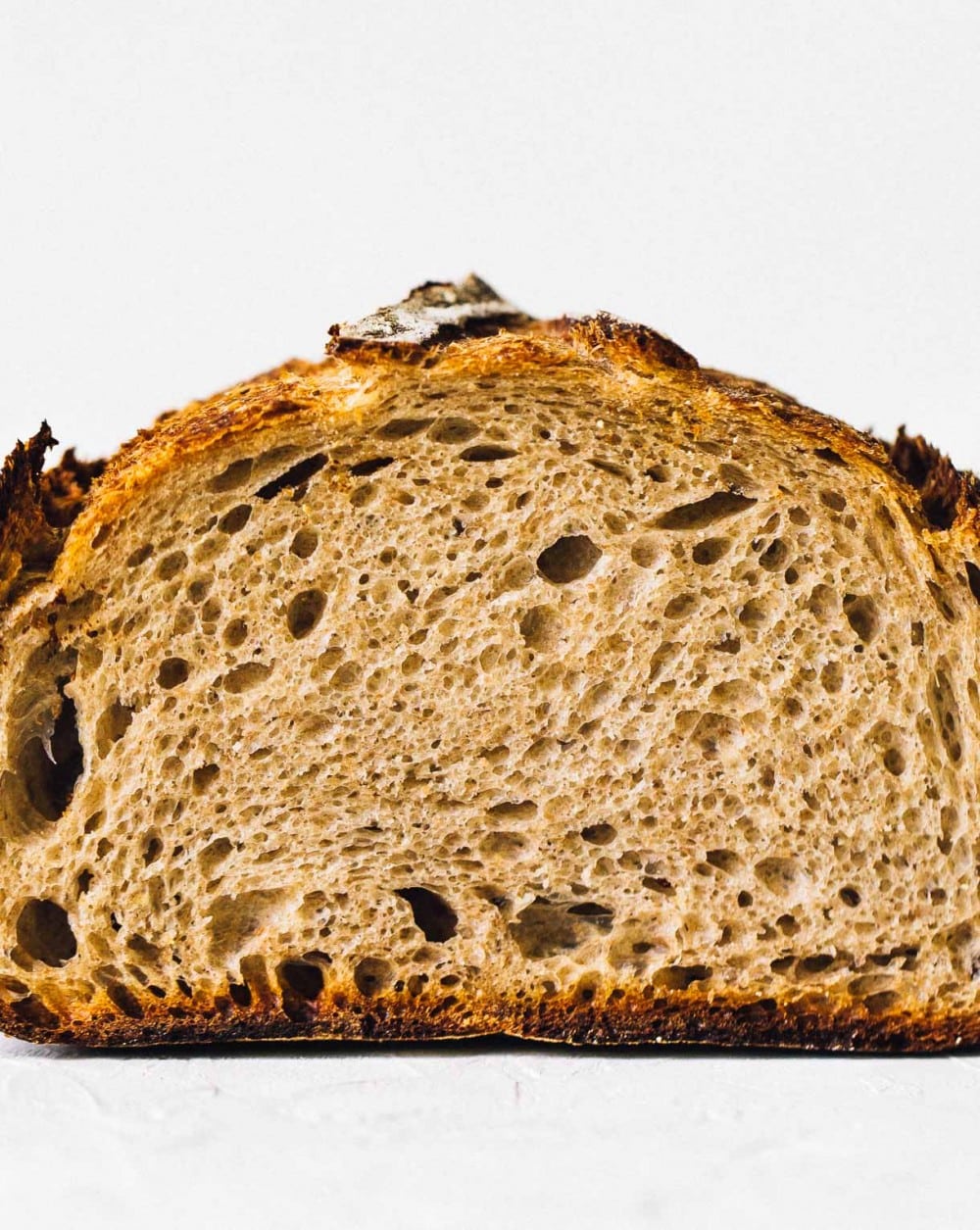
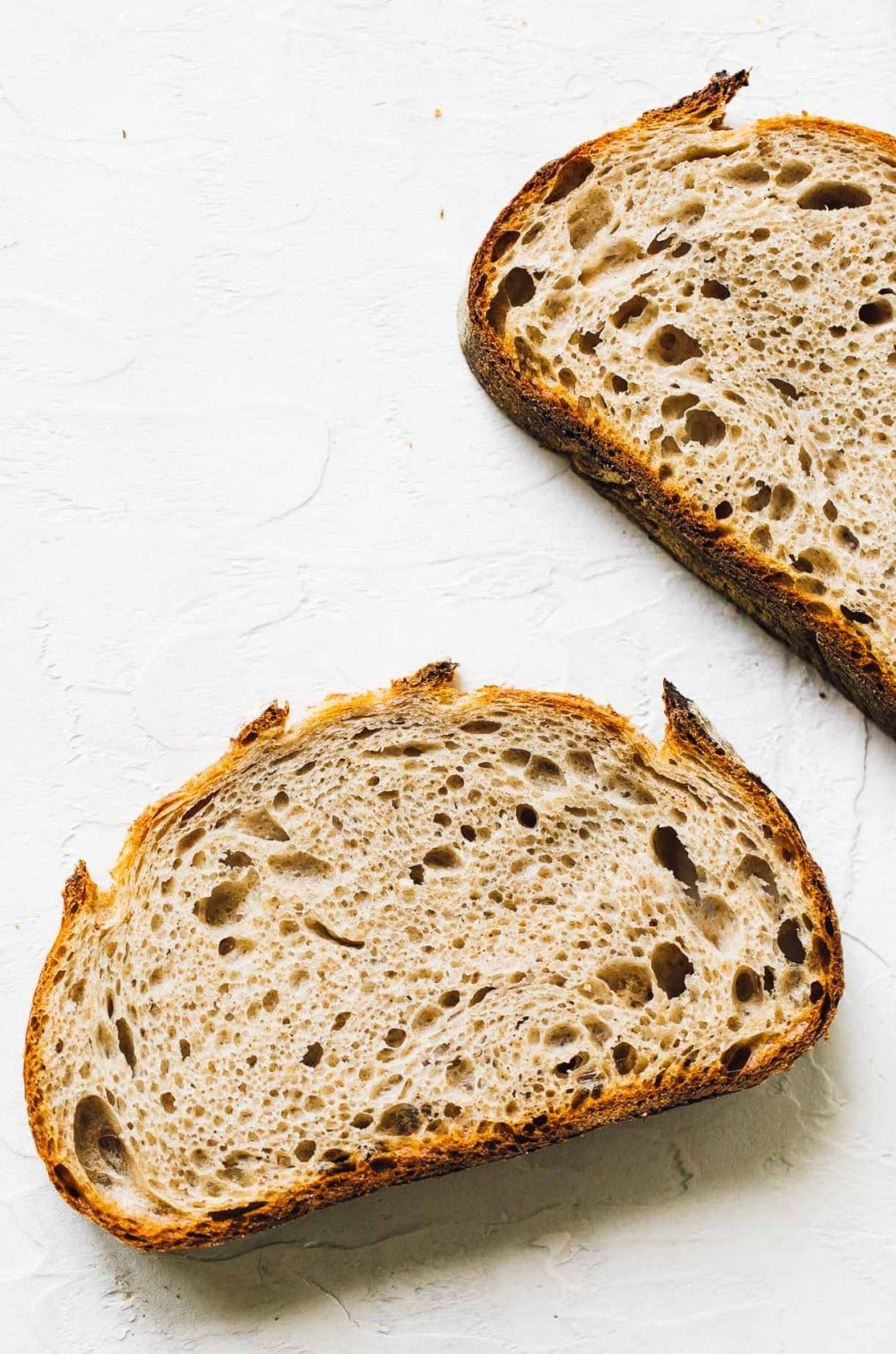
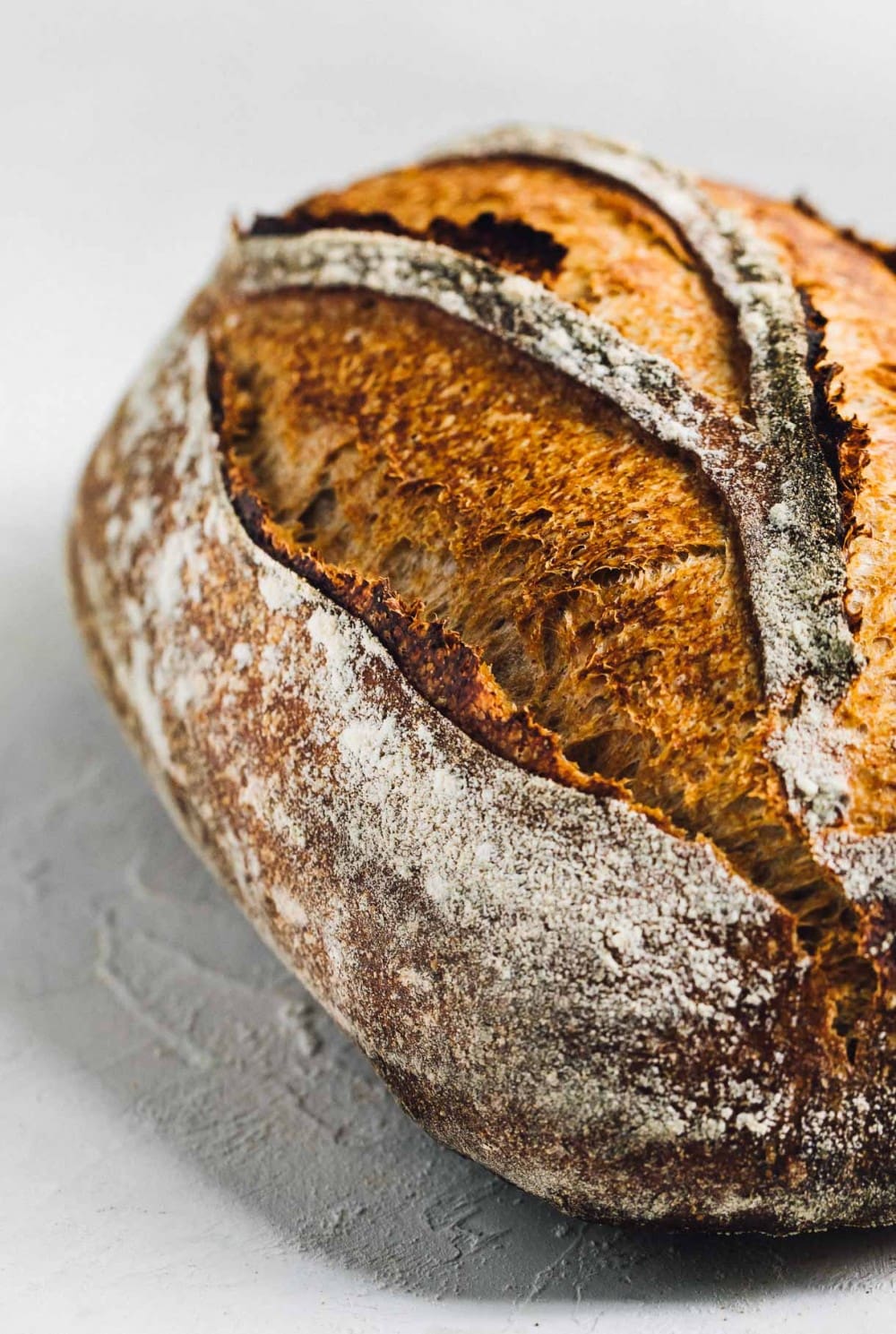
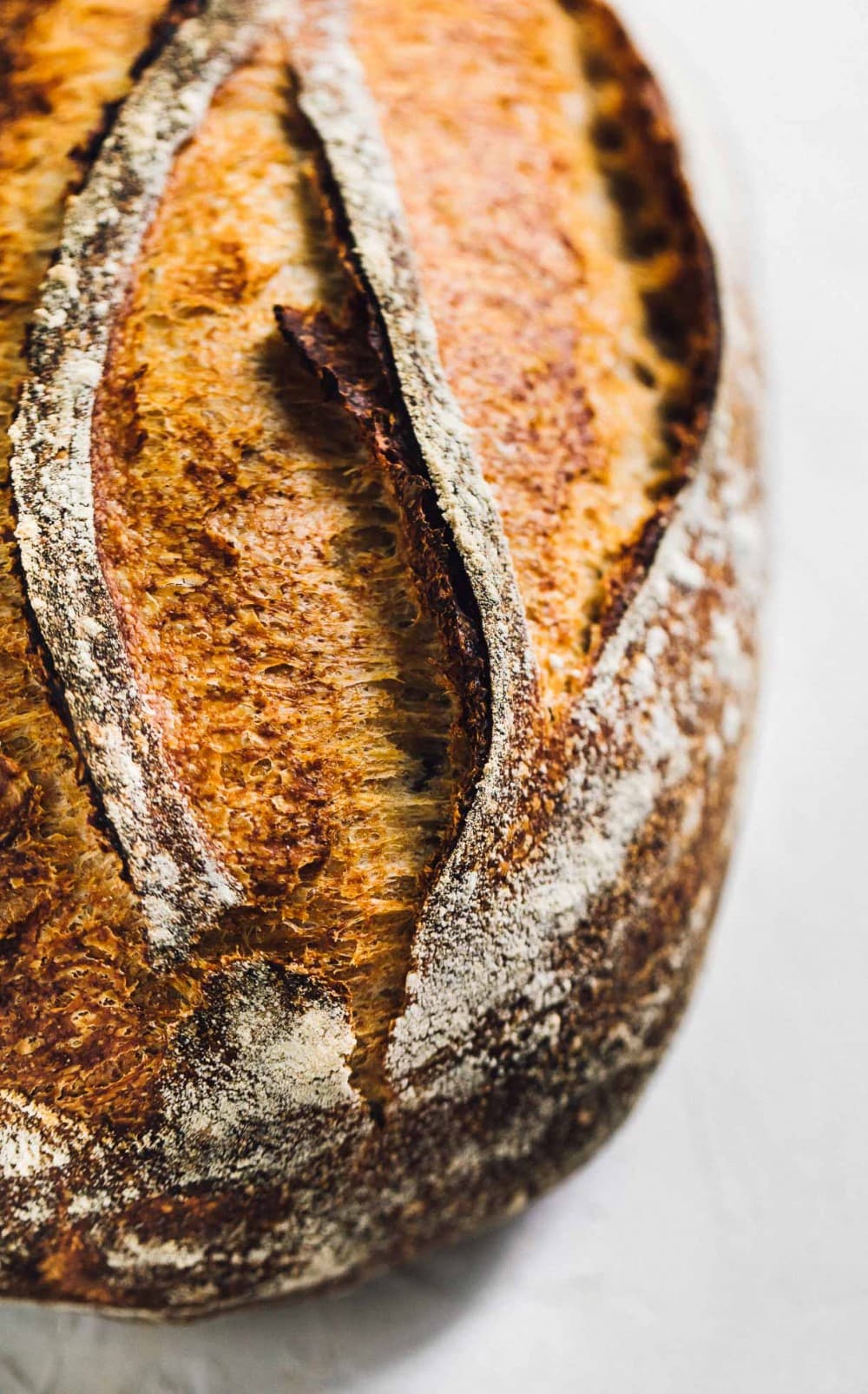
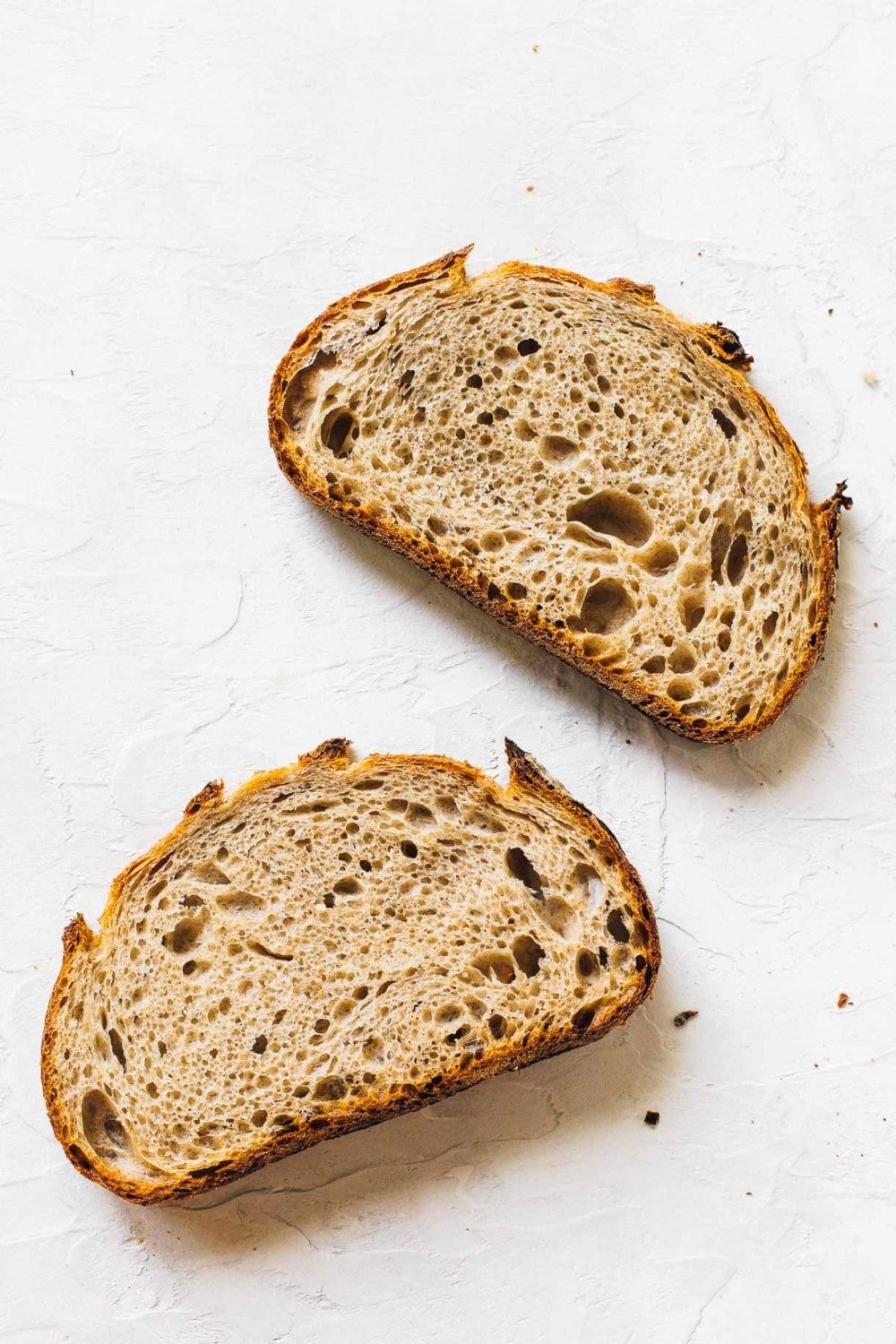
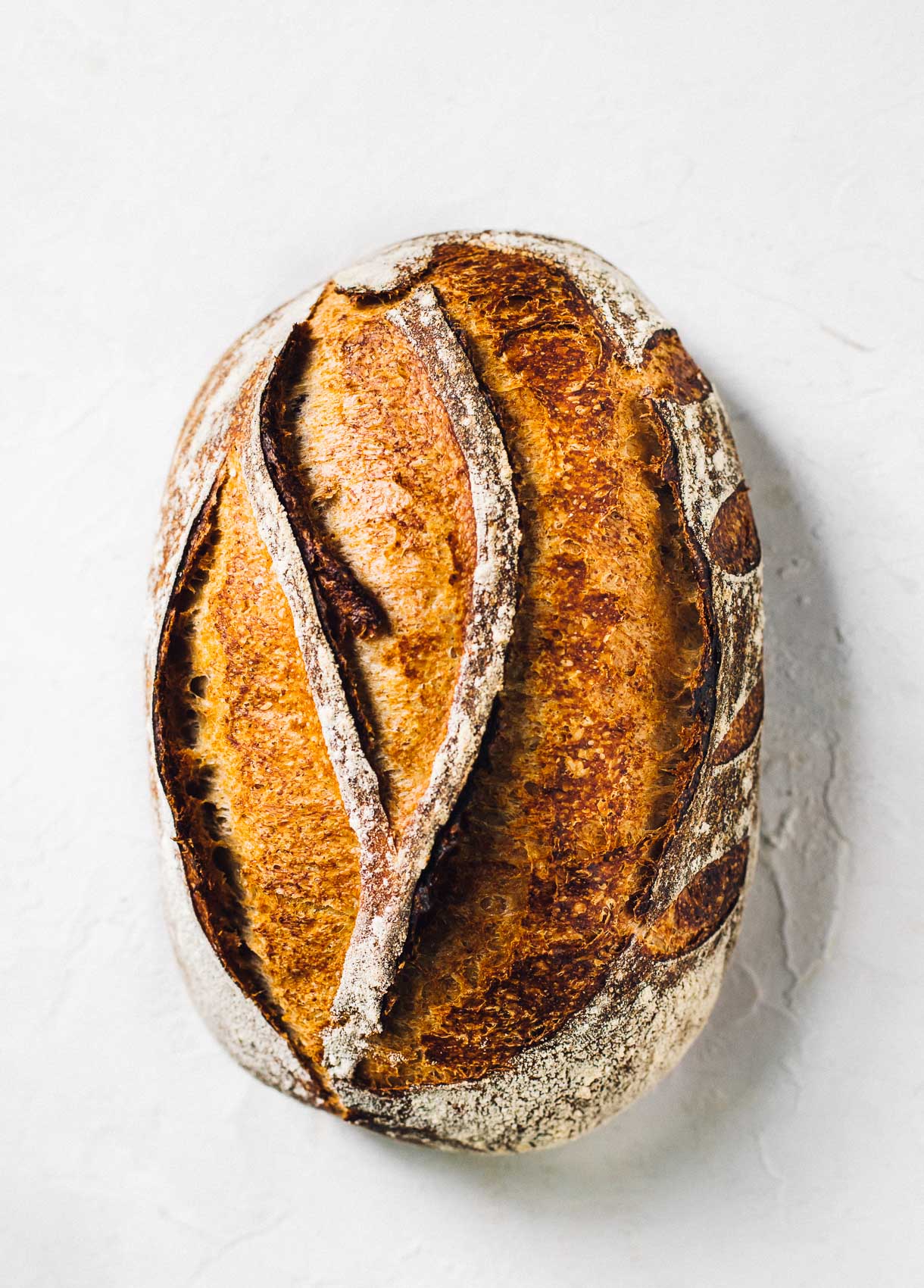
Homemade rye sourdough bread is a glorious choice for sandwiches, or eating on its own. Made with a blend of whole wheat, bread flour, and rye flour, this naturally fermented loaf holds its shape and has a moist, chewy crumb. The rustic crust is deeply colored and boasts beautiful blisters!

New to sourdough baking? You’ll need an active sourdough starter! I ship my well-maintened 13+ year old starter to anyone in the U.S! You can ORDER it here.
A great deli has a great rye bread for sandwiches, am I right?
I certainly love my Everyday Sourdough recipe for toast and my sourdough english muffins for epic breakfast sandwiches, but I had my heart set on creating a loaf that was the perfect vehicle for my recent craving of EGG SALAD. I’m fully aware how strange this craving is, but let me tell you, when I piled it on this rye sourdough with crisp lettuce and pickled red onions – it was a joyful moment.
This rustic rye sourdough is called such because of its crisp, deeply browned crust and artisan sourdough shape, rather than baking it in a pullman loaf pan to get perfectly square slices for sandwiches. I might invest in one of those in the future, but for now, I wanted to share a sandwich bread recipe that you could make with your regular sourdough baking tools.
It’s hearty. Has substance. A pleasant tang. And a shatteringly crisp crust.
What is rye?
Rye is a type of grain, different than wheat, that contains a low amount of gluten. This means it will not create the same gas trapping air pockets that a bread made entirely of bread flour does.
The dough will also feel wetter and stickier compared to working with all purpose and bread flours, known as high gluten flours. Don’t be alarmed – the dough will become less sticky by the end of your stretch and folds. Knowing this before making this recipe is important.
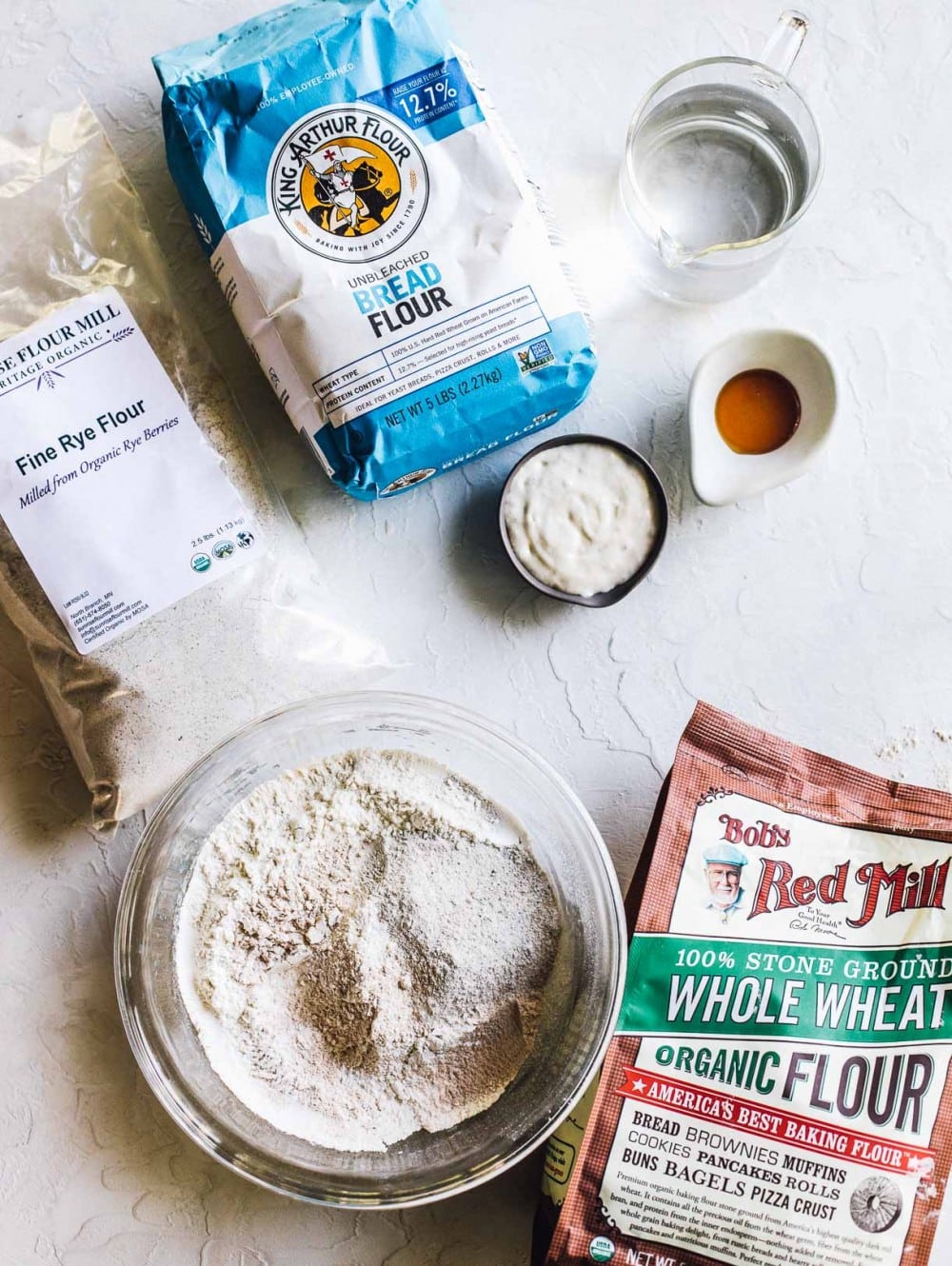
For these reasons, I like to use rye in combination with bread flour, for a balance of high/low gluten percentages. This allows for excellent structure in the loaf, while the rye contributes a complex flavor and wonderful softness.
Why I love using rye flour in sourdough bread
- Complex flavor!
- Rye flour bodes particularly well to sourdough as it’s unique fruity, subtle sourness compliments the traditional notes of fermented bread.
- Less dense than traditional rye bread.
- Because of the chemical reaction that takes places in rye flour during fermentation, your loaf will be airier and fluffier than if you were to use rye flour in a bread made with commercial yeast.
- Bread has a moist, chewy texture that you can’t achieve with whole wheat.
- Because of rye’s ability to absorb and keep much of it’s moisture, the inside of a sourdough loaf made with rye flour will have a more moist texture.
- Your loaf will stay soft for several days after baking!
- Higher nutritional profile that whole wheat.
- Rye contains more nutrition than wheat flour does, and this is especially true when rye flour is added to sourdough bread. The slow fermentation increases the nutrient availability of the flour.
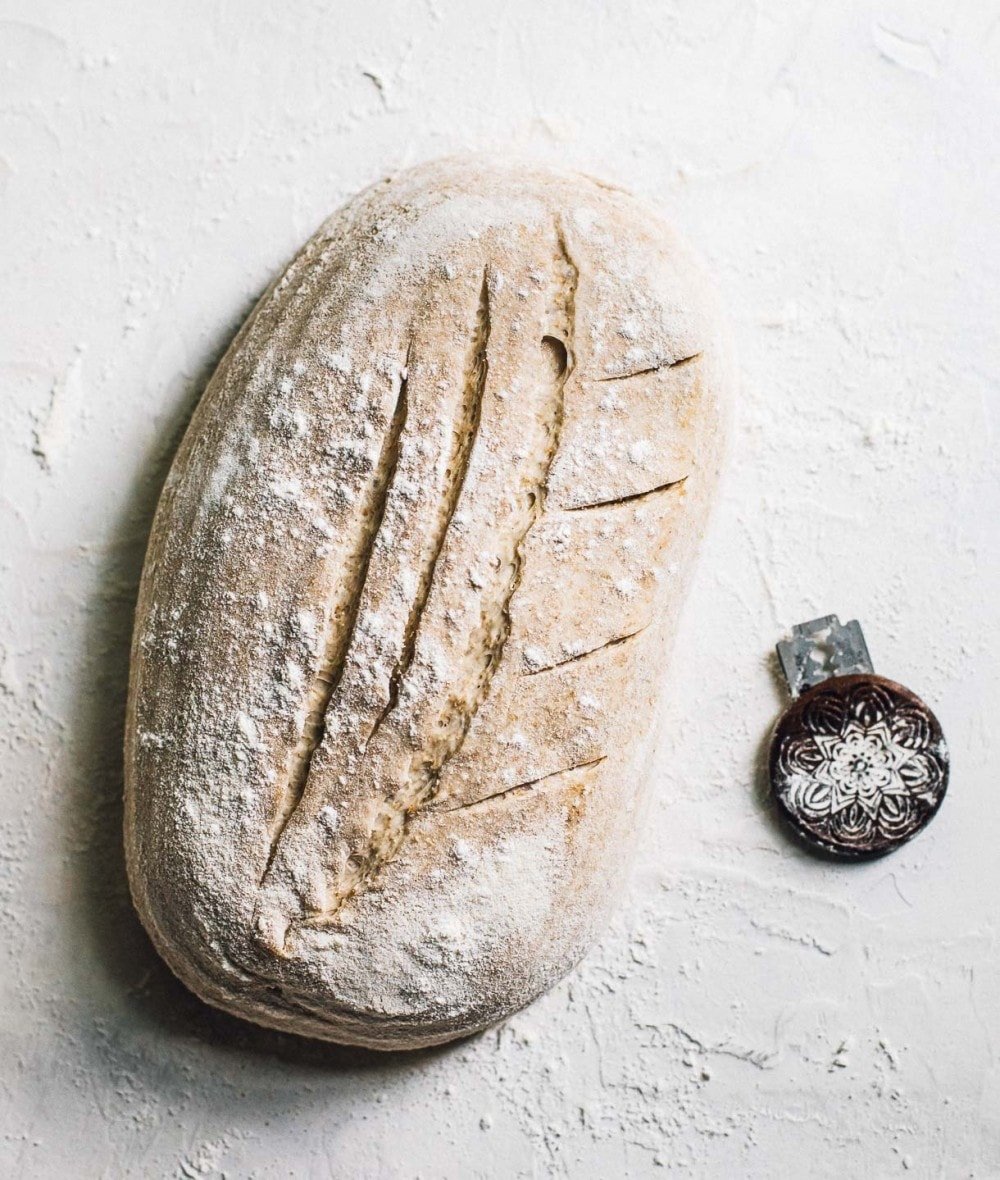
How to make rye sourdough bread that holds its shape
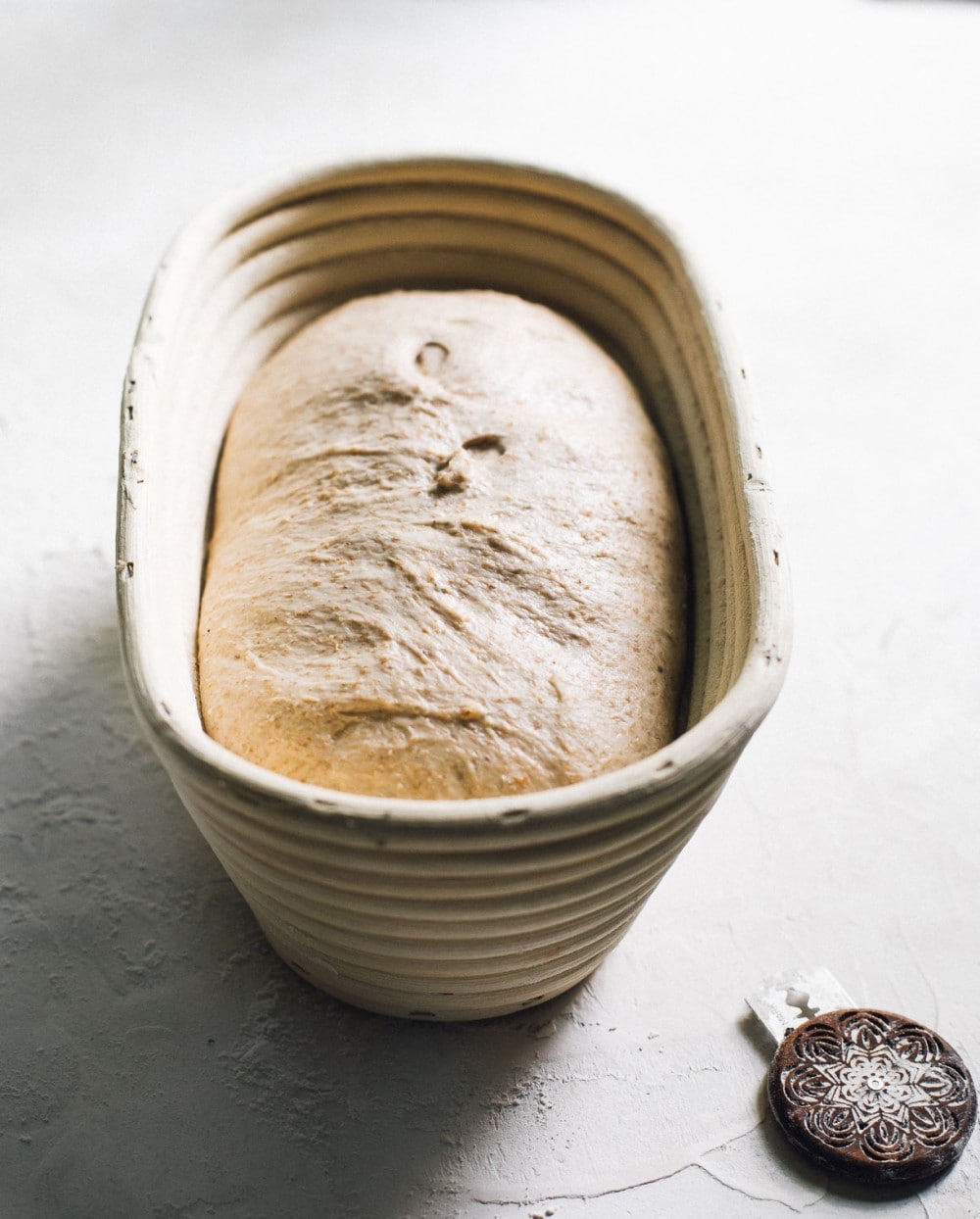
Because rye flour has little to no gluten content, it’s difficult to make a loaf of 100% rye bread. It can be done, but I wanted this to be a hybrid loaf, that would hold it’s shape for you, and still achieve a nice rise.
That’s why I used bread flour in combination with the rye and whole wheat, because it’s higher protein percentage is the key to the loaf holding its shape.
You’ll also notice this is a slightly smaller loaf, which makes the slightly wetter dough more manageable. Yes, you’ll notice the dough is slightly wetter than other sourdough bread you’ve made, and that’s okay! Just keep going with it. It will bake up with great structure if properly fermented.
WATCH this short video to see all the steps of making rye sourdough, so you know what to expect from your dough.
What should I bake an oval loaf in?
I tried using my round dutch oven for baking oval loaves in the past, but without fail the edges of the dough with hit the side of the pot, creating wonky, bulged shapes. I’m newly in love with the Challenger Bread Pan, which has a unique shape that allows you to bake any shape of bread in it! Bâtards, boules, demi-baguettes, and other loaves of almost any size.
Because of how it’s made, the perfect amount of steam is created inside the pan. I’ve never had better oven spring or thinner crusts.
This pan is magical. If you love baking sourdough, it is 100% worth having in your kitchen. You can learn more and purchase here.
My favorite things to eat on rye bread:
- egg salad
- whipped feta and tomato jam
- smashed avocado + lemon + smoked paprika
- ricotta + strawberry rhubarb jam
- salted butter
More sourdough recipes:
Yield: 1 loaf
Equipment
- oval banneton (can also use round)
Ingredients
- 55 grams active sourdough starter
- 280 grams slightly warmer than room temperature water (about 80-85 degrees F)
- 15 grams honey
- 100 grams medium (or light) rye flour
- 260 grams bread flour
- 40 grams whole wheat flour
- 7 grams fine sea salt
Instructions
- Before beginning, it will be helpful to watch this SHORT VIDEO to see me make this bread, noticing that the dough will be stickier than normal because of the rye flour, but it will come together – you just have to trust!
- Add starter, water, and honey to a bowl. Whisk thoroughly until combined, with a fork. Add flours, and mix together first with the fork to start to incorporate, then with your hands until a shaggy dough is formed, and the bits of flour left just disappear. Sprinkle the salt on top and do not mix in, just leave it on top. Cover with a damp cloth.
- Autolyse: let dough sit for one hour, covered and undisturbed.
- Bulk ferment: Now you will knead the salt that is sitting on top, into the dough for about 2 1/2 minutes. There is no precise way to do this, just think of working the dough through your hands and up against the bowl, push and pull. You will start to feel the dough relax a bit around 1 minute. Then leave the dough alone, covered, for 30 minutes. This counts as your first set of stretch and folds.
- After those 30 minutes pass, perform a set of stretch and folds. Repeat 2 more times.
- Now you will let sit, undisturbed and covered with a damp cloth, for the remainder of its bulk fermentation. You will know it is finished with its bulk ferment when the dough has risen about 75% (just short of doubling) in size, is smooth and puffy on top, with a few bubbles around the edges. It will not be as jiggly as some sourdough you've made before. I find this takes between 5-7 hours, depending on the temperature of your home. If the temperature in your home is above 72 degrees, this will be on the lower end; if it is cooler it will take on the longer end. Always go by the look and feel of your dough to know when it is finished proofing rather than time.
- When finished with bulk fermentation, lightly dust your work surface with flour. Put dough onto the work surface, and pre-shape. Then let sit for 15 minutes on your work surface.
- Then shape your dough using the video attached here as a guide.
- Place dough into your flour dusted banneton, (or flour dusted linen lined banneton) seam side up. (Optional, you can wait 15 minutes after placing it in banneton, and pinch the perimeters of the dough into the center to hold the shape even more, called stitching.) The dough will now go through its final rise. You can do this on the counter, which will take about 1 1/2 to 2 hours at 70 degrees F for the dough to puff up and be jiggly. It will not double. OR you can do the final rise overnight in the refrigerator, with the banneton covered in a plastic bag or with a very damp cloth. You need this for holding moisture in.
- Time to bake. Preheat your oven to 475 degrees F, with your dutch oven preheating inside the oven. When the oven is preheated, flip your dough out gently onto parchment paper and score your dough. If you did the final rise in the refrigerator, take it straight from fridge to scoring. You should score it cold, and DO NOT need to let it come to room temp.
- Then put scored dough into the dutch oven on the parchment, and put cover on. Turn oven down to 450 degrees F and slide dutch oven in. Bake for 20 minutes, then remove cover.
- Turn heat down to 430 degrees F, and bake for 20 to 25 more minutes, until crust is golden brown and crackly. Remove from oven, and remove bread from dutch oven and place onto a cooling rack.
- Wait AT LEAST one hour to cool otherwise, the interior will be gummy.
Did you make this?
tag @heartbeetkitchen on instagram and hashtag it #heartbeetkitchen
June 12, 2020

Julie
July 24, 2024
I have made this bread twice and we have eagerly eaten both loaves. Thank you for sharing this recipe. I am still struggling with my dough being sticky….not as sticky the second time, but definitely not beautifully smooth like yours. I dusted the formed loaf with a bit of rice flour prior to placing it in the flour dusted banneton. Any help you can provide me would be most appreciated since i’m pretty sure I’ll be making and baking this bread again! Thanks, again.
Amanda Paa
July 25, 2024
Hi Julie! If it sticky when you go to shape it, that is a sign of overproofing. If you email me a photo of the crumb I can help assess! amanda@heartbeetkitchen.com
Claire
July 20, 2024
Turns out amazing every time. Reminds me of the rye bread we used to get from an old Hungarian bakery. I’ve been trying to recreate that bread for 40 years, and finally found the perfect recipe.
Amanda Paa
July 20, 2024
oh that’s amazing! love the story about the bakery. thank you for sharing your joy.
Ingrid
July 19, 2024
Well, I just made the most beautiful, soft, delicious rye bread that I’ve ever made. In the morning, I fed my starter, then added my active starter to the rest of the dough in the early afternoon, did my rest/stretch and fold/first rise and then shaped it right before bed and put it in the fridge overnight. Baked it up first thing the next morning and it was a perfect, beautiful baby.
Amanda Paa
July 19, 2024
oh yay! so glad to hear your success, ingrid!
Louise
July 18, 2024
Hi Amanda,
Is it possible to swap the bread flour for regular all purpose flour?
Excited to try this recipe!
Amanda Paa
July 19, 2024
Hi Louise! All purpose flour and bread flour are unfortunately not interchangeable. You need the bread flour here for the strength and structure it provides. It is stronger and therefore also absorbs more water. So if you were to use ap flour in place of it, you would have a very wet dough that isn’t manageable.
Yvonne Zamora
July 18, 2024
Hi Amanda! I’m a big fan of you and your creations. I even started baking sourdough after watching one of your post and purchased your starter!
We love rye bread with caraway seeds, when in the process should I add the seeds?
Thank you and keep posting!
Amanda Paa
July 18, 2024
Hi Yvonne! I’d add them in the 2nd set of stretch and folds. Enjoy!
Michael
July 9, 2024
Have made about 10 loaves of this recipe. The family loves – loves – LOVES it! Makes a wonderful side to a pasta dinner. If you haven’t made it yet: you will be amazed at how easy it is and how wonderful it tastes. Promise! One question: I have been making this in a 5 qt, round dutch oven. Would like to do a 150% recipe in a 7 qt. How would my baking times change? Thanks again for a super recipe!
Amanda Paa
July 10, 2024
So glad you’re enjoying the recipe! Baking time shouldn’t change much with a bigger loaf, I’d maybe leave the cover on the dutch oven 5 minutes longer than usual.
Sharon Roos
July 7, 2024
Fabulous crust and crumb. Taste addictive. I’ve been trying for a few years and this is the best I’ve made.
Theodine Jansen van Rensburg
July 6, 2024
A delicious bread!!!! I baked this bread and for a beginner, it was easy to follow the recipe instructions.
Amanda Paa
July 6, 2024
So glad you enjoyed it! Thanks for making the recipe.
Massimo
July 6, 2024
Can’t wait to try this.
Newbie question, do you put ice in your Dutch oven? If so, how ?
I have rye flour & bakers flour, do I also need whole wheat flour ?
Thank you !
Amanda Paa
July 6, 2024
Hi! I don’t normally put ice in my dutch oven, but you can put one cube in when you put the bread into the vessel if you want to create more steam. I like the whole wheat, but if you wanted to replace with bread flour you could. Do not replace with rye flour.
Brian Mulhearn
June 30, 2024
Wow, this was the first time making sourdough and I am more than impressed with the results. A great recipe and very easy to follow, thank you so much.
Amanda Paa
June 30, 2024
wonderful to hear! enjoy the sourdough journey!
Cami Brazell
June 24, 2024
Not to be hyper technical, but when the starter is included in the initial mix, it is a fermentolyse. Only if the starter is NOT in the initial mix is it an autolyse. It may seem a small distinction but it is important because bulk fermentation begins as soon as the starter is added.
Betsy
June 16, 2024
Can I bake this in a loaf pan? If so what temp would you recommend? Time?
Lyn
June 2, 2024
This is now our go to rye. Great taste and texture. We use it for toast and sandwiches. Easy to make.
Audrey Cortez
May 28, 2024
Perfect recipe!! I can’t wait to bake this one again. I only had Bob’s dark rye flour and loved the flavor and crumb.
Amanda Paa
May 28, 2024
So glad you enjoyed it, thanks for making the recipe!
Mahek
May 26, 2024
Hi Amanda,
I just made this bread today. It turned out fantastic! I just had one question – is the honey necessary for the recipe or could I omit the sweetness in the bread?
Thank you!
Amanda Paa
May 26, 2024
Hello! I prefer the honey because it balances the flavor, and thought it created a better loaf. If you leave it out, this will change slightly and it may take a bit longer to ferment.
Mahek
May 26, 2024
Thanks Amanda, that makes sense!
Louise Allen
May 19, 2024
I am looking for a rye like from the Jewish Deli. Is this recipe like that? Curious since it does not have caraway which of course I can add. thanks !
JoRobertson
May 18, 2024
This will probably be my go to recipe that I make for my family on repeat. It’s healthy and delicious and turned out just perfect. I added caraway seeds, because I love a caraway rye bread.
Amanda Paa
May 19, 2024
Love hearing that! Thanks for making the recipe.
Jen
May 8, 2024
This turned out great! Subbed molasses for honey and used dark rye flour.
Amanda Paa
May 8, 2024
So great to hear that, thanks for making the recipe!
Corinne
April 25, 2024
Patterns are easy to understand
Becky A
April 21, 2024
I do not have a banneton, is that necessary? Other bulk ferments I have done in a straight sided glass bowl. Thoughts?
Vivien
May 29, 2024
I’ve made this a few times now, shaped into a Batard and let them rise in regular loaf pans. They work just as well when lined with a floured dishtowel. I then bake in a Dutch oven and we are LOVING this bread
Amanda Paa
May 29, 2024
oh, that’s great, thanks for your notes!
Kathy Lorenz
April 20, 2024
I just made this. I’ve been practicing and I felt ready. Omgoodness!! It was easier than I thought because of the excellent instructions, tips and video. I couldn’t wait, so I cut into it and my family devoured the first loaf. So, so delicious!! I think this is my absolutely favorite recipe. Thank you so much!!
Amanda Paa
April 20, 2024
Yay, love hearing your success and joy! Thanks for making the recipe.
Deb P
April 19, 2024
This bread is awesome!! I use molasses instead of honey and add caraway seeds.
Eliz
April 18, 2024
Can I bake this in a loaf pan? Or should I find a different recipe for that.
Thanks, looks like a great recipe.
Amanda Paa
April 18, 2024
I think this would be too much dough for a loaf pan!
Janny
April 11, 2024
HI,
I am new to sourdough bread making and am having success with plain bread flour with 100 gram starter dough. I am going to try this recipe but am wondering why there is only 50 grams of starter being used with that amount of flour? Thank you.
Tim
April 12, 2024
The less starter you use, the longer the bread will take to ferment. The added advantage here is that it develops a lot more flavour as a result. I have modified this recipe a bit but I use 70g starter in my loaf. That’s also because it’s getting a bit colder in my kitchen and I want the ferment to go a little quicker. It’s so fun, good luck
Mom24
May 13, 2024
I use 100g starter in this bread. Very happy with my results.
Tim
April 3, 2024
Thank you so much for this recipe, I have made it probably a dozen times. This week, I made the dough 20% bigger than the recipe indicates. making a slightly less than 1kg loaf. I also never add the honey but often substitute sultanas to make it a fruit rye. This week I also used a strong (12.7%) wholemeal bread flour as the main flour, using white as a smaller percentage. Despite all of my experiments with this recipe, I seem to always come out great! Your pizza dough recipe is also the best one I have ever used. Thank you!
Robert disalvo
April 2, 2024
Hello and again you dazzle in this perfect recipe! Thank you so much. I was wondering if you tried turning this into a more pumpernickel style? Thanks again for all your perfect recipes!
Tracy Wilkinson
March 28, 2024
The nicest, tastiest and most delicious recipe to date! I think adding a touch of honey and rye flour is genius and 4 loaves have all be beautiful. Very happy with clear and concise instructions. Don’t delay, do it ❤️❤️
Amanda Paa
March 29, 2024
Makes me so happy to hear that, Tracy! Thanks for making the recipe.
Lori L Stevens
March 25, 2024
I don’t have a scale. Would you convert the weight measures to cups, Tablespoons, etc?
Caroline
March 25, 2024
Is the honey for taste or for structure? Have you tried subbing molasses in for honey?
Amanda Paa
March 25, 2024
Molasses works great, too!
Maggie
March 21, 2024
I would like to try this recipe but only have dark rye. Should I not use it?
Amanda
March 28, 2024
I prefer using the dark rye! I just add a little extra water and caraway seeds for taste .. plus I heard it helps make the starter a bit more active as a bonus !
Lisa
March 30, 2024
How much extra water do you use for dark rye? That’s all I have and would love to try :)
Sandra Zarou
March 19, 2024
I’m getting ready to try this rye bread recipe. Can’t wait! What is the longest you would leave the dough in the refrigerator? have you ever left it as long as 24-36 hours?
Amanda Paa
March 19, 2024
Can definitely go 24 hours!
Mom24
May 13, 2024
I let it cold ferment for a few days and have been happy with my results. Great recipe.
LuAnn
March 16, 2024
can you use dark rye flour, instead of light rye, flour?
Amanda Paa
March 16, 2024
Hi! Medium rye or light rye are what this recipe was developed for.
Brian
April 27, 2024
I used dark rye and it turned out excellent
Amanda Paa
April 27, 2024
Oh, great! So glad to hear that. Thanks for leaving the note.
Maria Waters
March 16, 2024
I made this bread today. It is definitely a winner. Lovely favours! I had to hold hubby back from cutting it too early!! Thank you :)
Amanda Paa
March 16, 2024
So glad to hear that, Maria!
Julia
March 11, 2024
I’ve made this recipe four or five times in the last two months. It’s so delicious and my husband’s favorite bread I make! I’ve played around with it and I like to multiply the recipe by 1.5 for a bigger loaf, add caraway seeds, and then bake it in a loaf pan. Delicious for sandwich bread. I’ve made it exactly following the recipe too and you really can’t go wrong.
Cherri
May 14, 2024
Julia, did you use an ordinary glass loaf pan?
Amanda Paa
May 15, 2024
Hi Cherri, I do not recommend glass for baking bread. It does not conduct heat well, and you’ll end up with crispy close to burned edges with a middle that takes forever to finish baking. Aluminum is a better choice.
susan handloff
March 9, 2024
OMG!!! Moist, flavorful,bubbly, crusty…My favorite sourdough recipe yet! I have been baking in a dutch oven in my air fryer, since my oven is on the blink. My air fryer only heats to 400 degrees, so I left the bread in the dutch oven with the cover on for 1 hour and it turned out PERFECTLY. I’m staying home from the party of the year, eating bread in bed. Heaven.
Amanda Paa
March 10, 2024
wow, you made sourdough in air fryer – amazing! had no idea that could work.
Norali
March 7, 2024
Hi! How long can I leave it in the fridge for the 2nd rise? Got my timing wrong and hoping I can just leave it in the fridge closer to 16hrs…
Amanda Paa
March 7, 2024
Not too worry, that will be just fine!
Megan Meridew
March 5, 2024
I’ve made three loaves with different brands of rye flour. The first and second times it was wet as the recipe said. The second time it was much drier. Every loaf was fabulous tasting. Definitely a keeper.
Amanda Paa
March 6, 2024
So great to hear, Megan! Love that you are baking so much. Yes, each brand of rye flour will differ in their absorption rate. And actually, each time you buy a new bag, even of the same brand, it can change a bit because of the weather during the growing season of that harvest.
Kim
March 5, 2024
Turned out great! Crust was thick and crusty and inside soft and tasty! I hollowed one loaf out for a homemade dill dip appetizer and served with a second cut up for dipping- complete hit! Will make right away again for Reuben sandwiches. Thank you!
Judy
March 5, 2024
ItI’m making for first time.not sure how to tell if my starter is active (it’s in fridge now. I’ve read to many recipes so Im confused. Some said take out of fridge, get to room temp, feed 111 ratio till active then weigh.
Dawn
February 29, 2024
Best ever!! Thanks Amanda
Amanda Paa
February 29, 2024
Yay, so glad you enjoyed the recipe!
Loiise
May 11, 2024
Is this like the Jewish Deli Rye if you add Carraway seeds? Tia!
Rony
February 28, 2024
He estado viendo tu receta y me gustaría me ayudarás con una receta para panes o solo tendría que multiplicar las cantidades muchas gracias de antemano
Sarah
February 25, 2024
I want to make this but my baby isn’t old enough to have honey yet. But she LOVES chewing on the sourdough crust. What is a good substitute? Sugar??
Amanda Paa
February 25, 2024
Hi! You could substitute maple syrup! Or sugar would also work.
Shannon Stovsky
March 2, 2024
the honey is cooked…..
Kathleen
March 6, 2024
Babies should not be given baked goods with honey. The temperature and pressure needed to kill botulism spores will not be reached.
Bobbie
February 24, 2024
Hi, I just did the salt stretch and fold. Am I doing 2 more S & F or 3 more? Step 5 was not 100% clear to me. Thanks!
Amanda Paa
February 24, 2024
Hello! You do 4 total sets of stretch and folds. Salt + stretch and fold is #1, then 3 more times, 30 minutes apart.
Tracy
February 24, 2024
Hi Amanda! I am so excited to try this recipe with fresh milled flours. Are there any mods that I need to make? Also, are the temperatures written using the Challenger bread pan? I am a new user and have not quite gotten the temp right. Do you use ice ? Thank you!!
Amanda Paa
February 24, 2024
Hi Tracy! I would try making it as is the first time; if anything the dough might soak up a bit more water because of the fresh milled grains, but this is a stickier dough anyways so that might not be a bad thing. I would adjust as needed on the 2nd bake, according to how the first went. Yes, this recipe is temperature I use for Challenger Bread Pan; I usually don’t add ice, but you can add a cube if you’d like.
Tracy
February 24, 2024
Thank you! I may be trying the recipe with fresh milled on 1st bake – I don’t have the other commercial flours sooo…I’ll let you know how it goes!
Mom24
February 21, 2024
So freaking good. Wow! Thank you.
Amanda Paa
February 21, 2024
Yay, so glad you enjoyed the recipe!
Jennifer Gershon
February 20, 2024
So happy to have found this page. Just started baking 2 weeks ago and the rustic rye has been the best recipe out of the 8 loaves I’ve baked.
I like how forgiving the recipe has been too. I had a scale mishap and had to guesstimate the flour amount on one loaf🤣
Amanda Paa
February 20, 2024
So glad to hear that! And nice work on the guesstimating!
Jenn Gershon
February 20, 2024
Seriously. So happy to have founds this. Did two this morning with dried fruit and pecans. Perfect! Just subscribed. Thank you !
Amanda Paa
February 20, 2024
oh, that sounds amazing with the dried fruit and pecans.
Glenda
May 15, 2024
New to sourdough here! 😁 I don’t have a banneton, yet. There are so many sizes and shapes, it’s overwhelming. Would I be able to bake this in a Dutch oven?
Alison Hainley
February 15, 2024
Can you use a medium rye in this recipe? That’s all I can find in my area
Amanda Paa
February 15, 2024
Yes, that will work!
Danielle
March 3, 2024
I was going to ask if a dark rye would still be good? That’s all I have on hand I think…
Casey Riitano
February 13, 2024
I finally succeeded in creating a rye starter and used it for this recipe and this is the first time I’ve truly had success with any rye bread. I missed the second shaping before fridge ferment but hopefully it doesn’t effect final product.
Amanda Paa
February 13, 2024
Yay, so glad to hear that!
Kat
February 13, 2024
I am new to baking bread and making this loaf has given me confidence. I have a loaf bulk rising and will add sunflower seeds at last fold. Thank you for this recipe.
Amanda Paa
February 13, 2024
Terrific! And I bet that will be delicious with the sunflower seeds.
Kay Sea
February 16, 2024
This is my go-to rye bread. I make about 2-3 loaves a week. I love gifting it out, everyone raves about it. I can’t tell you how many times I’ve shared this recipe!
Amanda Paa
February 17, 2024
That’s so wonderful to hear, happy baking!
Stephanie
February 12, 2024
Thank you for sharing your recipes and all the tips Amanda! My loaves have never been better. I started baking sourdough 6 months ago but since finding you, my bread is so much better. This Rye loaf is superb! Greetings from the UK!
Amanda Paa
February 12, 2024
Hi Stephanie! What a lovely note. So glad to hear you are finding success!
Alice Martin
February 15, 2024
Is it possible to make this without the honey?
Ellie
March 5, 2024
I tried it and it works just fine without the honey. No adjustments were needed, I just didn’t add the honey.
Stefanie
February 9, 2024
Hey, I would love to use this recipe and make a marbled boule out of it. When adding cacao powder, do I need to increase the water in it?
Amanda Paa
February 9, 2024
Hello! I haven’t ever tested added cacao to this recipe, so I’m not able to guide you. Sorry!