
Rustic Rye Sourdough Bread Recipe
By Amanda Paa – Updated October 31, 2023
Jump to Recipe
This post may contain affiliate links. Please read my disclosure policy.
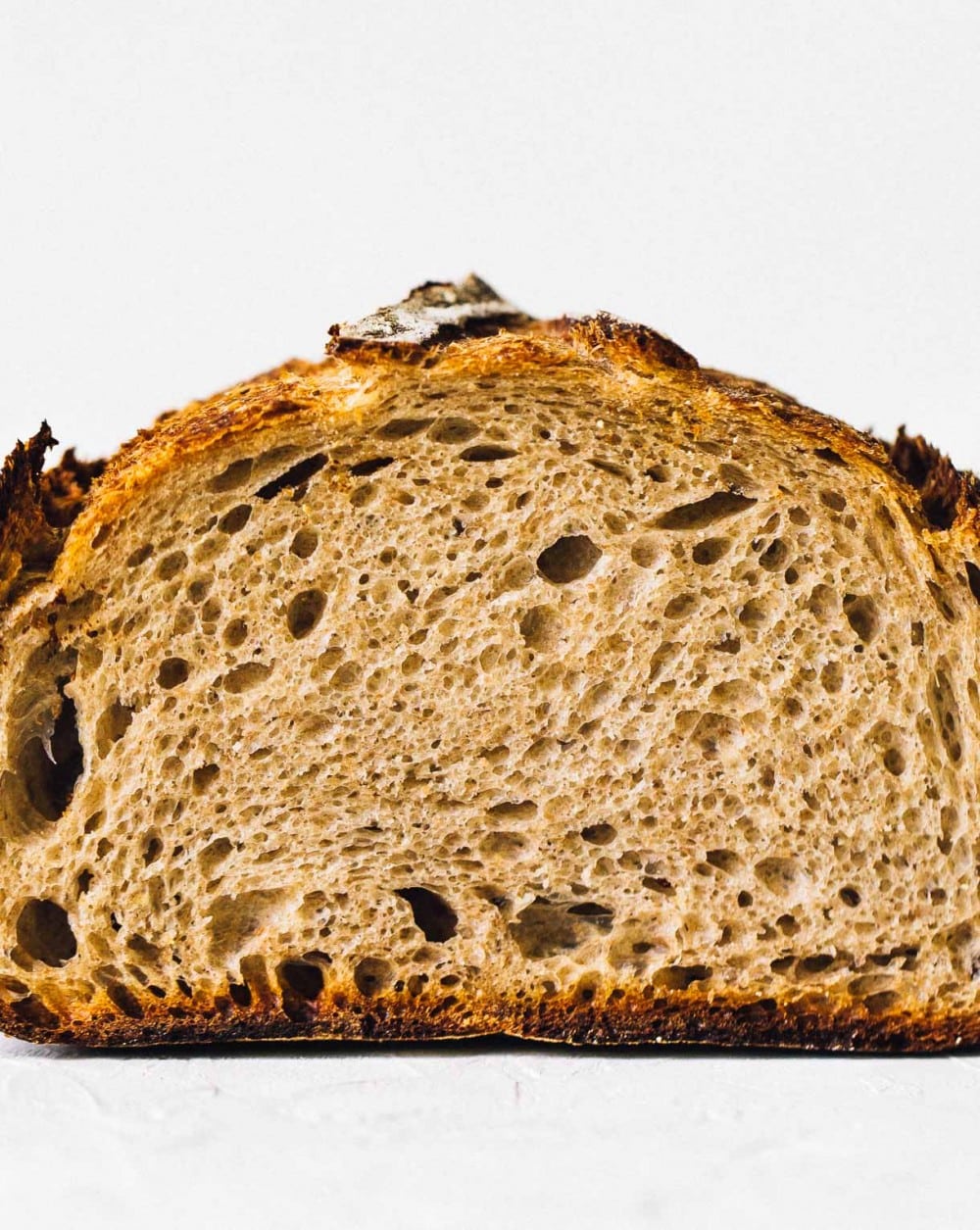
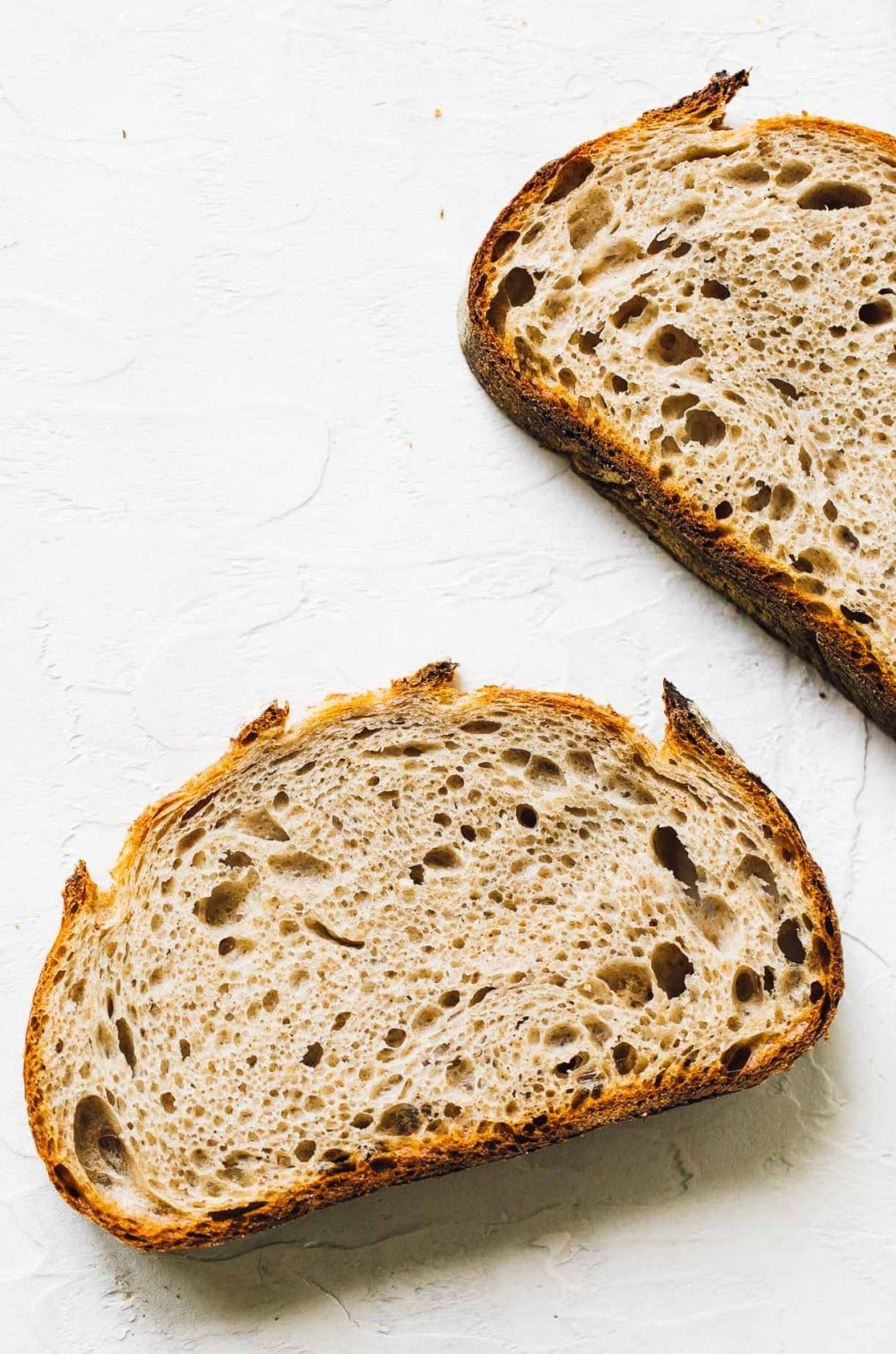
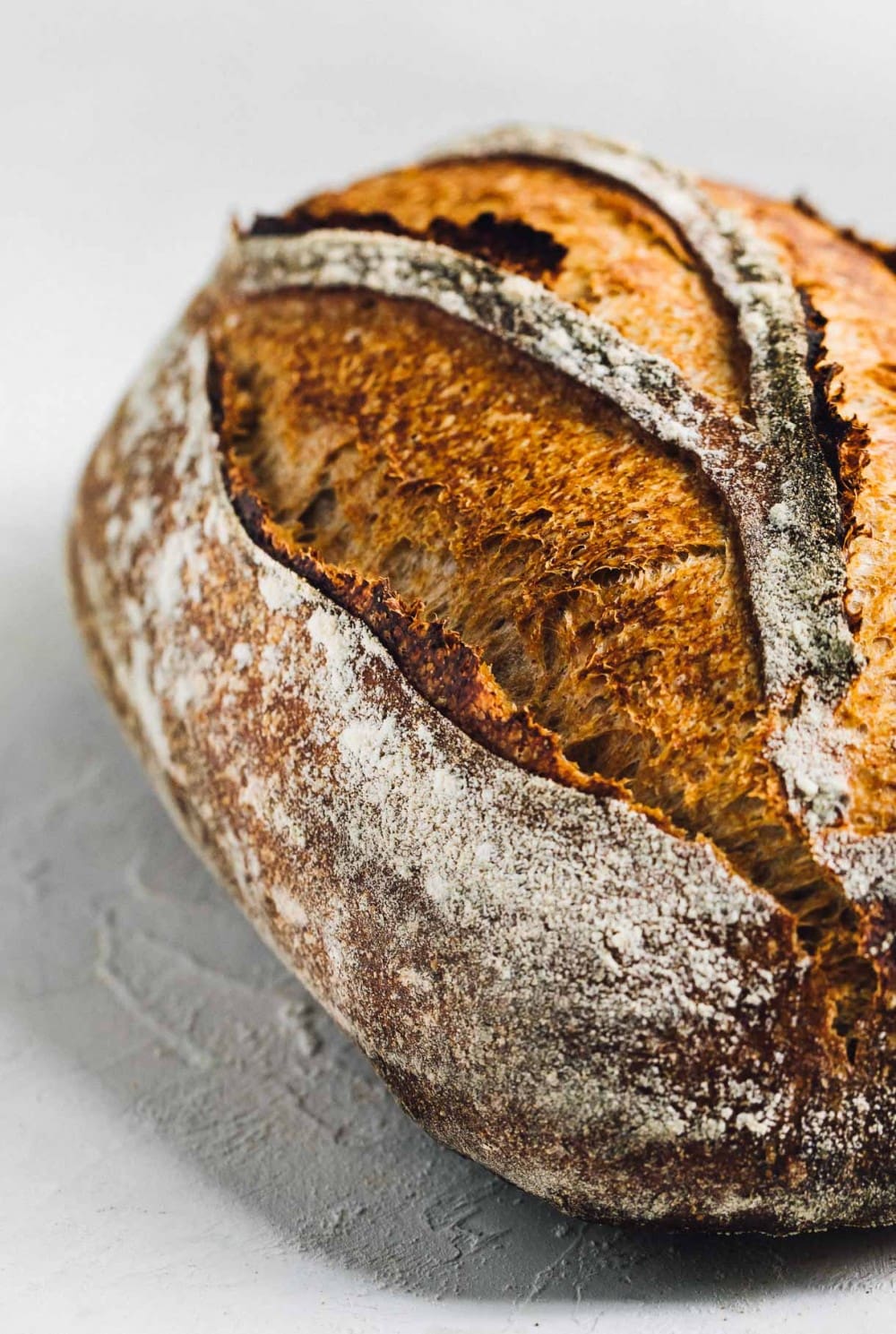
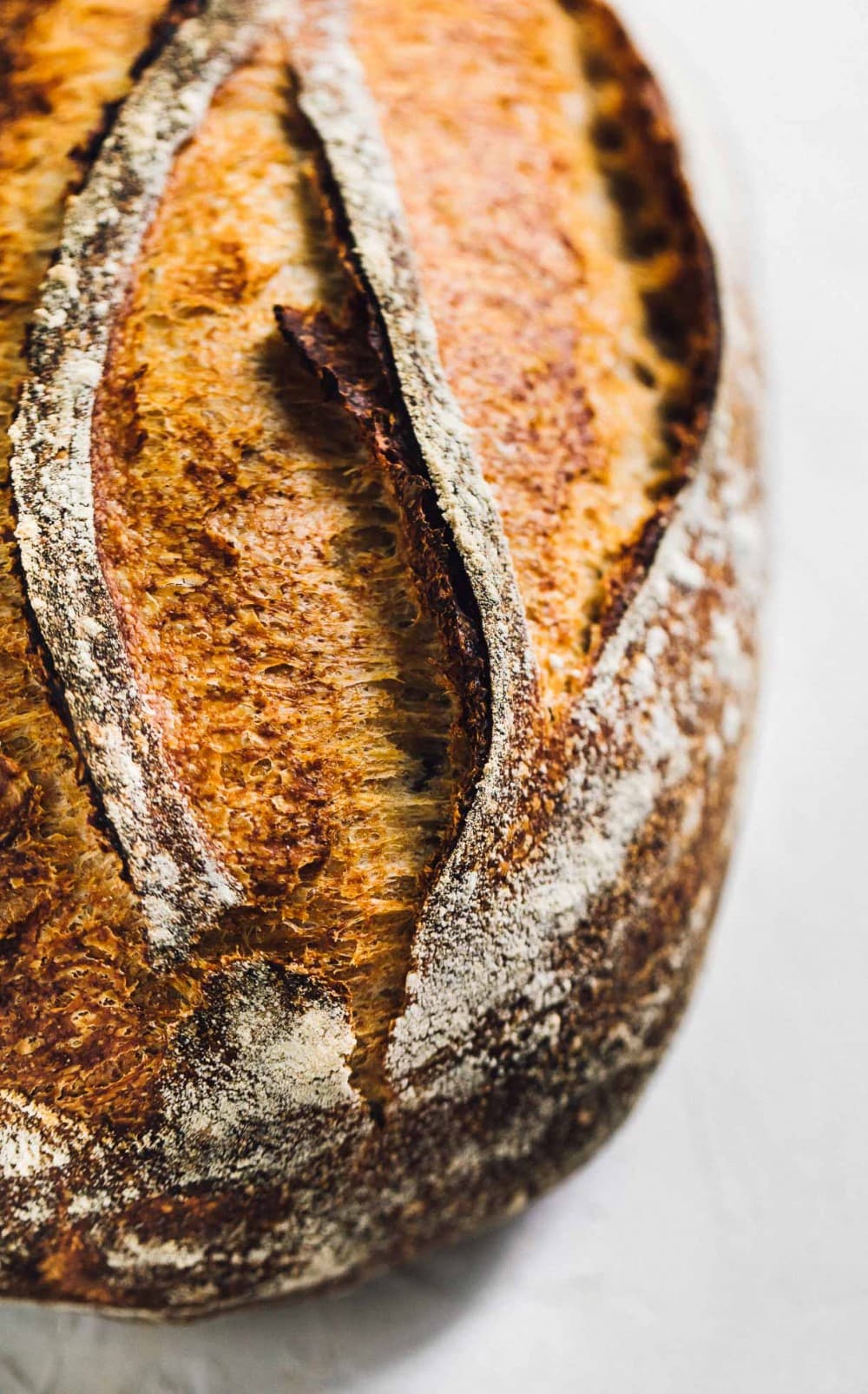
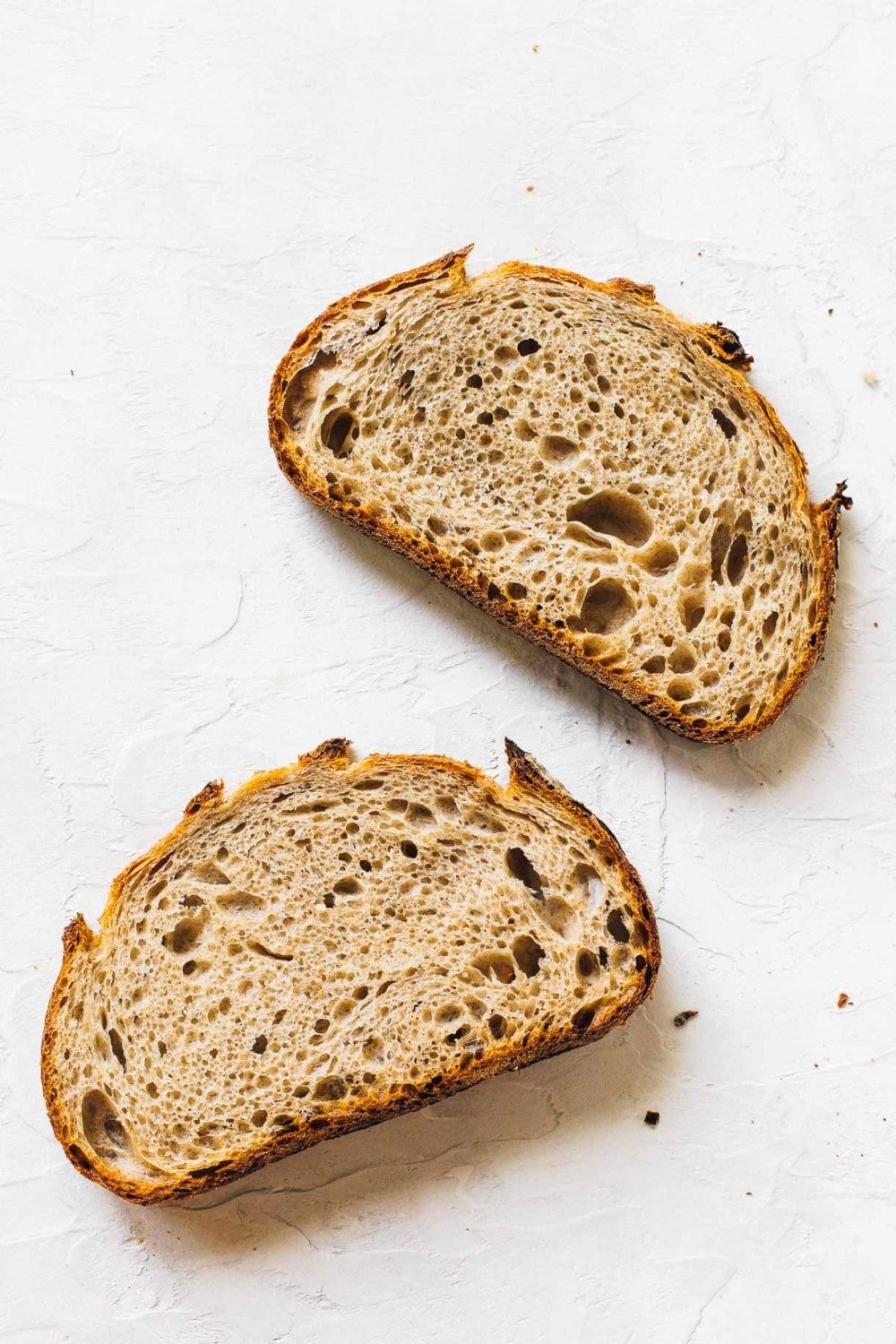
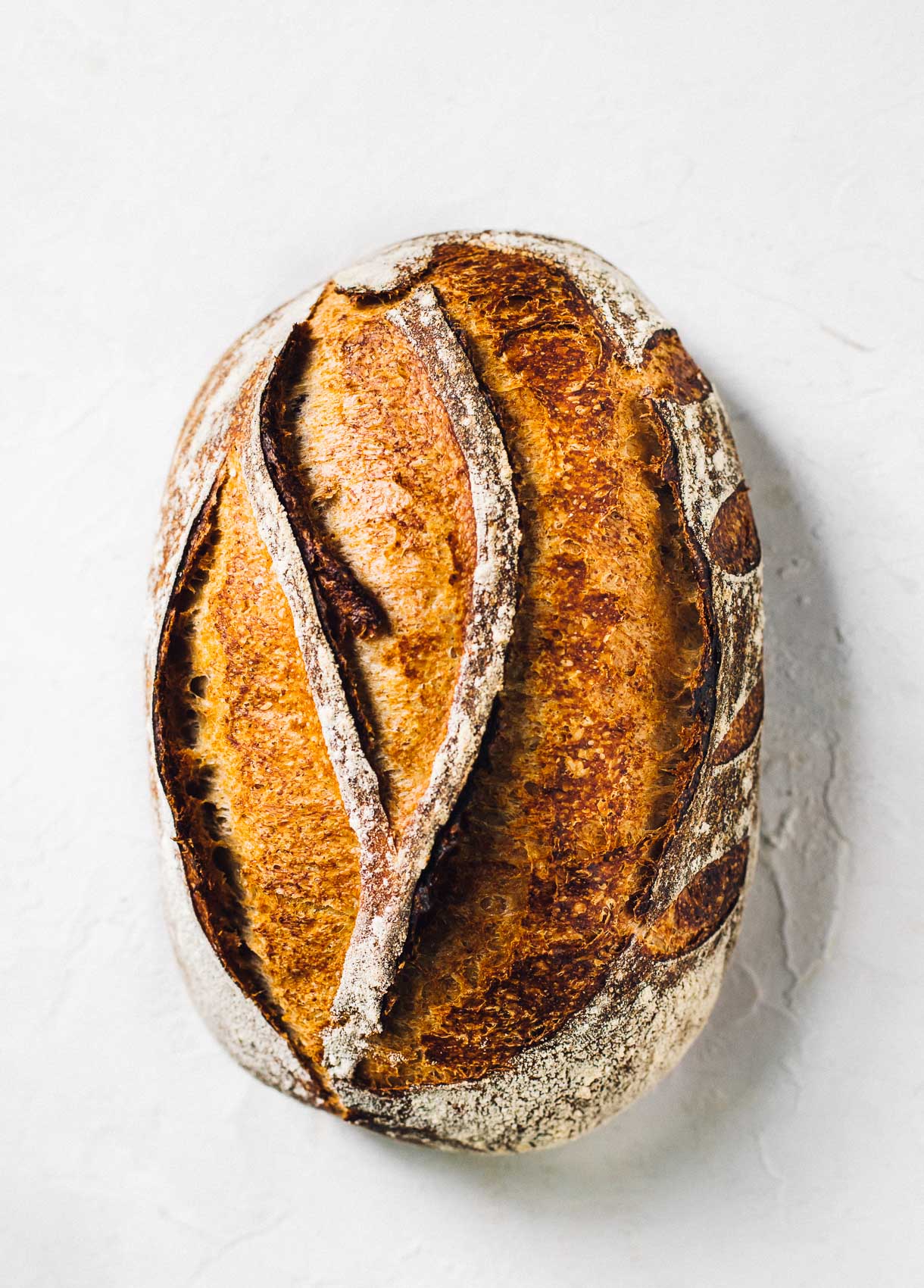
Homemade rye sourdough bread is a glorious choice for sandwiches, or eating on its own. Made with a blend of whole wheat, bread flour, and rye flour, this naturally fermented loaf holds its shape and has a moist, chewy crumb. The rustic crust is deeply colored and boasts beautiful blisters!

New to sourdough baking? You’ll need an active sourdough starter! I ship my well-maintened 13+ year old starter to anyone in the U.S! You can ORDER it here.
A great deli has a great rye bread for sandwiches, am I right?
I certainly love my Everyday Sourdough recipe for toast and my sourdough english muffins for epic breakfast sandwiches, but I had my heart set on creating a loaf that was the perfect vehicle for my recent craving of EGG SALAD. I’m fully aware how strange this craving is, but let me tell you, when I piled it on this rye sourdough with crisp lettuce and pickled red onions – it was a joyful moment.
This rustic rye sourdough is called such because of its crisp, deeply browned crust and artisan sourdough shape, rather than baking it in a pullman loaf pan to get perfectly square slices for sandwiches. I might invest in one of those in the future, but for now, I wanted to share a sandwich bread recipe that you could make with your regular sourdough baking tools.
It’s hearty. Has substance. A pleasant tang. And a shatteringly crisp crust.
What is rye?
Rye is a type of grain, different than wheat, that contains a low amount of gluten. This means it will not create the same gas trapping air pockets that a bread made entirely of bread flour does.
The dough will also feel wetter and stickier compared to working with all purpose and bread flours, known as high gluten flours. Don’t be alarmed – the dough will become less sticky by the end of your stretch and folds. Knowing this before making this recipe is important.
For these reasons, I like to use rye in combination with bread flour, for a balance of high/low gluten percentages. This allows for excellent structure in the loaf, while the rye contributes a complex flavor and wonderful softness.
Why I love using rye flour in sourdough bread
- Complex flavor!
- Rye flour bodes particularly well to sourdough as it’s unique fruity, subtle sourness compliments the traditional notes of fermented bread.
- Less dense than traditional rye bread.
- Because of the chemical reaction that takes places in rye flour during fermentation, your loaf will be airier and fluffier than if you were to use rye flour in a bread made with commercial yeast.
- Bread has a moist, chewy texture that you can’t achieve with whole wheat.
- Because of rye’s ability to absorb and keep much of it’s moisture, the inside of a sourdough loaf made with rye flour will have a more moist texture.
- Your loaf will stay soft for several days after baking!
- Higher nutritional profile that whole wheat.
- Rye contains more nutrition than wheat flour does, and this is especially true when rye flour is added to sourdough bread. The slow fermentation increases the nutrient availability of the flour.
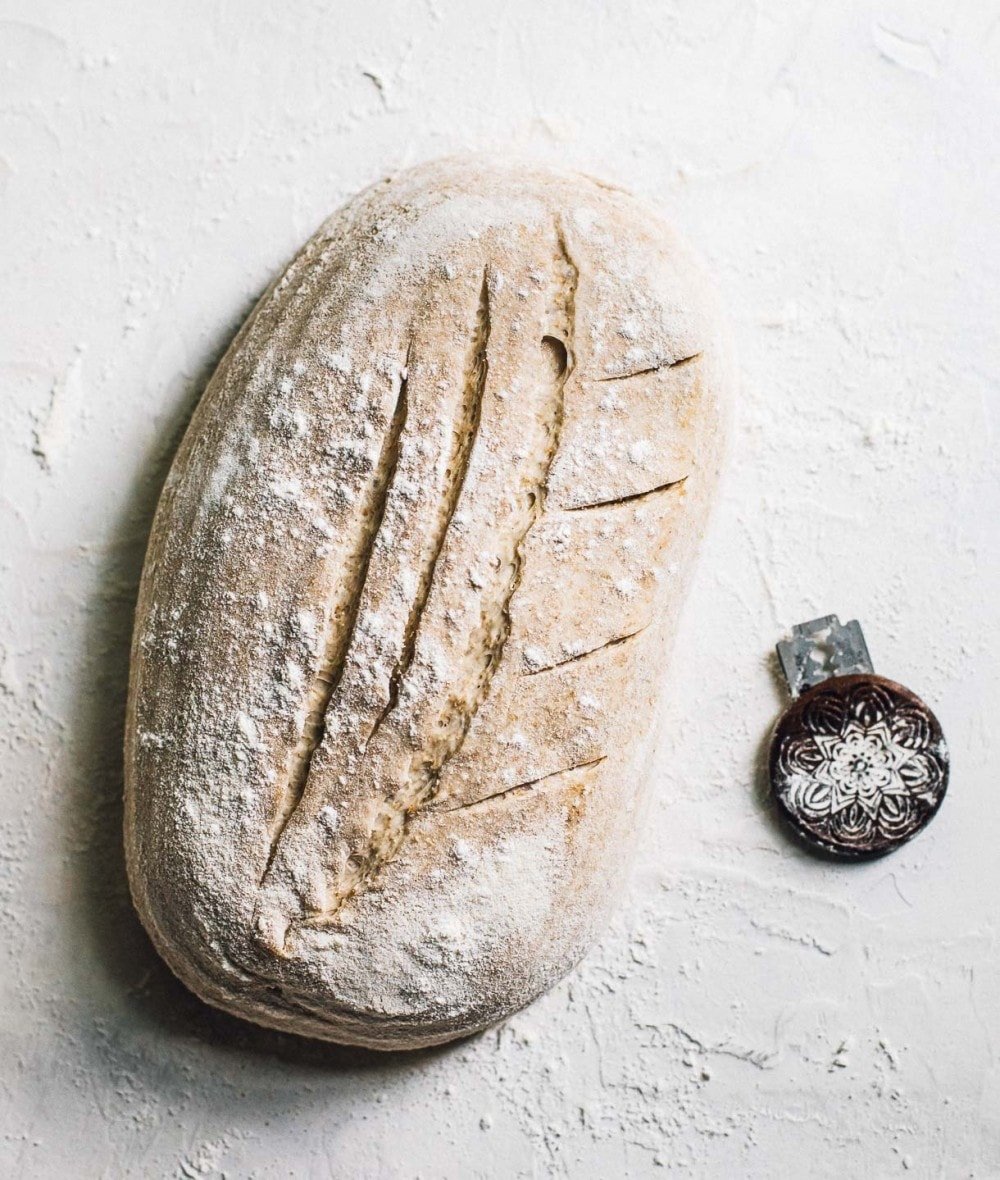
How to make rye sourdough bread that holds its shape
Because rye flour has little to no gluten content, it’s difficult to make a loaf of 100% rye bread. It can be done, but I wanted this to be a hybrid loaf, that would hold it’s shape for you, and still achieve a nice rise.
That’s why I used bread flour in combination with the rye and whole wheat, because it’s higher protein percentage is the key to the loaf holding its shape.
You’ll also notice this is a slightly smaller loaf, which makes the slightly wetter dough more manageable. Yes, you’ll notice the dough is slightly wetter than other sourdough bread you’ve made, and that’s okay! Just keep going with it. It will bake up with great structure if properly fermented.
WATCH this short video to see all the steps of making rye sourdough, so you know what to expect from your dough.
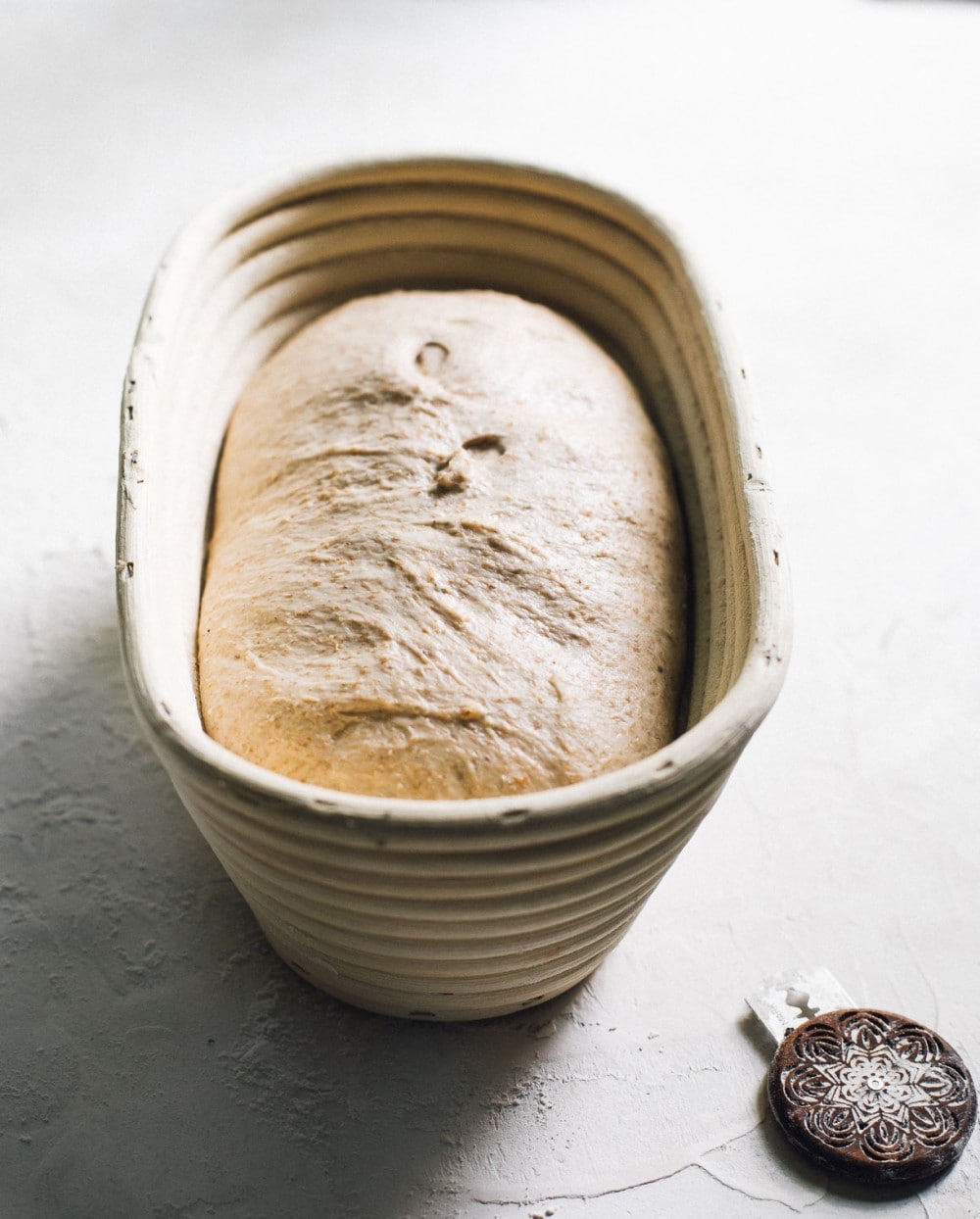
What should I bake an oval loaf in?
I tried using my round dutch oven for baking oval loaves in the past, but without fail the edges of the dough with hit the side of the pot, creating wonky, bulged shapes. I’m newly in love with the Challenger Bread Pan, which has a unique shape that allows you to bake any shape of bread in it! Bâtards, boules, demi-baguettes, and other loaves of almost any size.
Because of how it’s made, the perfect amount of steam is created inside the pan. I’ve never had better oven spring or thinner crusts.
This pan is magical. If you love baking sourdough, it is 100% worth having in your kitchen. You can learn more and purchase here.
My favorite things to eat on rye bread:
- egg salad
- whipped feta and tomato jam
- smashed avocado + lemon + smoked paprika
- ricotta + strawberry rhubarb jam
- salted butter
More sourdough recipes:
Yield: 1 loaf
Equipment
- oval banneton (can also use round)
Ingredients
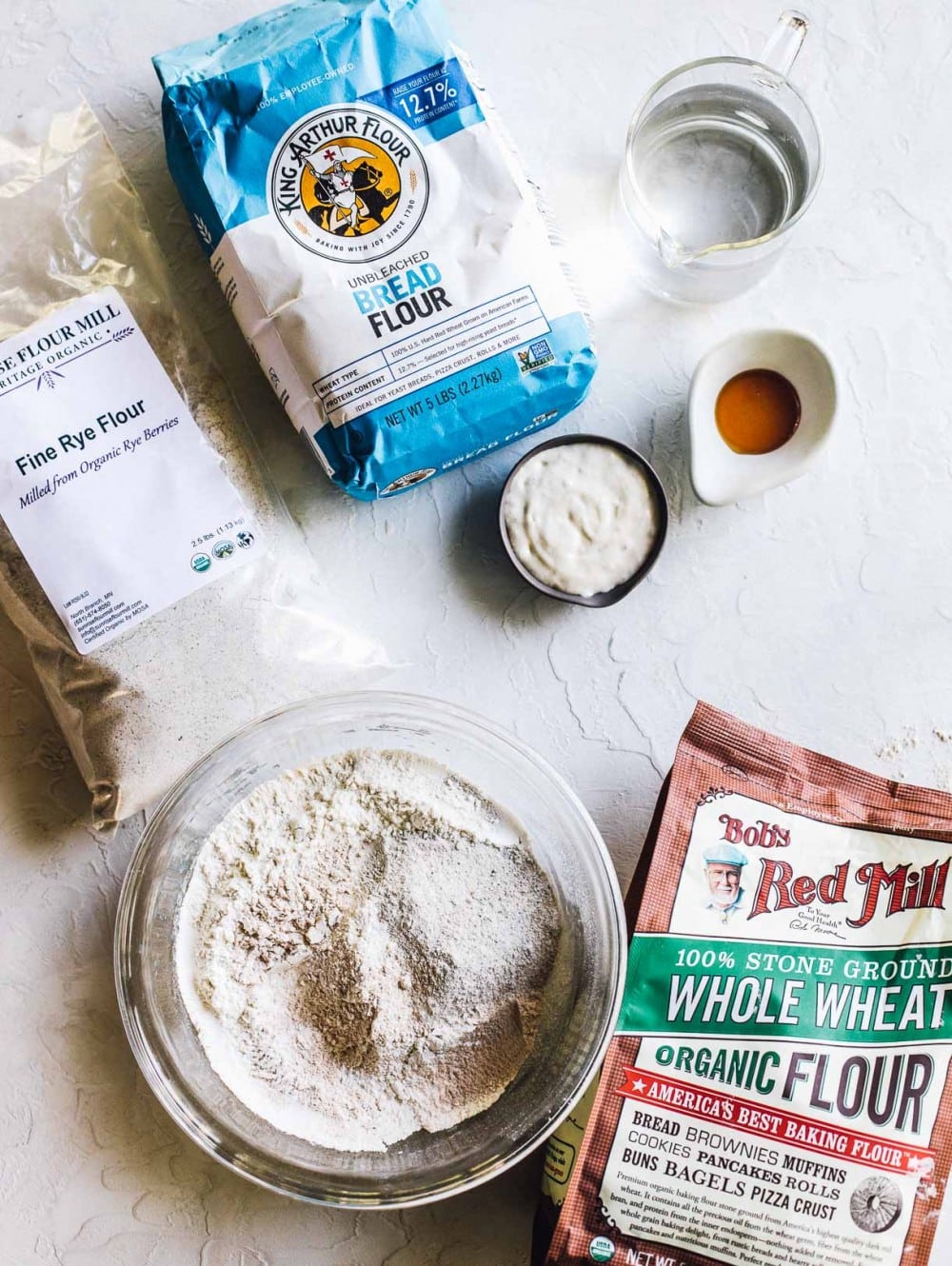
- 55 grams active sourdough starter
- 280 grams slightly warmer than room temperature water (about 80-85 degrees F)
- 15 grams honey
- 100 grams medium (or light) rye flour
- 260 grams bread flour
- 40 grams whole wheat flour
- 7 grams fine sea salt
Instructions
- Before beginning, it will be helpful to watch this SHORT VIDEO to see me make this bread, noticing that the dough will be stickier than normal because of the rye flour, but it will come together – you just have to trust!
- Add starter, water, and honey to a bowl. Whisk thoroughly until combined, with a fork. Add flours, and mix together first with the fork to start to incorporate, then with your hands until a shaggy dough is formed, and the bits of flour left just disappear. Sprinkle the salt on top and do not mix in, just leave it on top. Cover with a damp cloth.
- Autolyse: let dough sit for one hour, covered and undisturbed.
- Bulk ferment: Now you will knead the salt that is sitting on top, into the dough for about 2 1/2 minutes. There is no precise way to do this, just think of working the dough through your hands and up against the bowl, push and pull. You will start to feel the dough relax a bit around 1 minute. Then leave the dough alone, covered, for 30 minutes. This counts as your first set of stretch and folds.
- After those 30 minutes pass, perform a set of stretch and folds. Repeat 2 more times.
- Now you will let sit, undisturbed and covered with a damp cloth, for the remainder of its bulk fermentation. You will know it is finished with its bulk ferment when the dough has risen about 75% (just short of doubling) in size, is smooth and puffy on top, with a few bubbles around the edges. It will not be as jiggly as some sourdough you've made before. I find this takes between 5-7 hours, depending on the temperature of your home. If the temperature in your home is above 72 degrees, this will be on the lower end; if it is cooler it will take on the longer end. Always go by the look and feel of your dough to know when it is finished proofing rather than time.
- When finished with bulk fermentation, lightly dust your work surface with flour. Put dough onto the work surface, and pre-shape. Then let sit for 15 minutes on your work surface.
- Then shape your dough using the video attached here as a guide.
- Place dough into your flour dusted banneton, (or flour dusted linen lined banneton) seam side up. (Optional, you can wait 15 minutes after placing it in banneton, and pinch the perimeters of the dough into the center to hold the shape even more, called stitching.) The dough will now go through its final rise. You can do this on the counter, which will take about 1 1/2 to 2 hours at 70 degrees F for the dough to puff up and be jiggly. It will not double. OR you can do the final rise overnight in the refrigerator, with the banneton covered in a plastic bag or with a very damp cloth. You need this for holding moisture in.
- Time to bake. Preheat your oven to 475 degrees F, with your dutch oven preheating inside the oven. When the oven is preheated, flip your dough out gently onto parchment paper and score your dough. If you did the final rise in the refrigerator, take it straight from fridge to scoring. You should score it cold, and DO NOT need to let it come to room temp.
- Then put scored dough into the dutch oven on the parchment, and put cover on. Turn oven down to 450 degrees F and slide dutch oven in. Bake for 20 minutes, then remove cover.
- Turn heat down to 430 degrees F, and bake for 20 to 25 more minutes, until crust is golden brown and crackly. Remove from oven, and remove bread from dutch oven and place onto a cooling rack.
- Wait AT LEAST one hour to cool otherwise, the interior will be gummy.
Did you make this?
tag @heartbeetkitchen on instagram and hashtag it #heartbeetkitchen
June 12, 2020

Julie
May 17, 2021
Hi Amanda, after the bulk rise (7ish hours), how long is the dough suppose to set overnight in the refrigerator? Is there a set time that may be too little or too much? Last few times, my boule did not have much rise/crumb when baked. Any feedback is appreciated! Thank you.
Amanda Paa
May 18, 2021
Hi Julie!
I usually let mine sit in refrigerator overnight, anywhere from 9-11 hours. If the rise isn’t where you’d like it, it may be that you aren’t building enough strength in your dough while stretching and folding, or you could be overproofing the bulk fermentation, depending on the temperature of the water you used and the temp of your home.
Steve
May 4, 2021
After trying many sourdough recipes unsuccessfully, this new baker finally managed to pull off what I consider a perfect cob loaf. This simple recipe delivered Aa crunchy crust with a soft and slightly chewy bread. I loved the addition of the honey. It will now be my go to recipe.
Amanda Paa
May 5, 2021
so glad you enjoyed the rye loaf!
Elyse
May 2, 2021
This is my favorite sourdough bread to make. I’ve made it almost once a week for months now and it always turns out perfect.
Amanda Paa
May 3, 2021
so glad you like it, Elyse!
Barry
April 30, 2021
After my first 20 tries, I am now making fabulous sourdough bread. Next stop is your sourdough rye. I would like to add caraway seeds. How much do you suggest for 2 loaves?
Amanda Paa
May 1, 2021
Hi Barry! I’m so glad you are on the sourdough journey! I would suggest about 2 1/2 tablespoons caraway seeds for 2 loaves.
Barry
May 1, 2021
Thank you
Fred
April 28, 2021
I really like your rye recipe but now I am looking for a 100% (or nearly so) whole wheat sourdough recipe. This “rye”is best sourdough recipe I’ve made. I am now looking for a 100% whole wheat whole grain sourdough recipe. I’m convinced, Amanda, that you are the one to do this! Hope you can work your magic on this challenge. Thank you so much.
Amanda Paa
April 28, 2021
sounds like a great challenge, i’ll work on it!
Martha B
April 26, 2021
I feel so proud to have made it twice now. Great success!! My only problem? The parchment paper gets stuck to the bottom of the loaf….any suggestions? Love making it with a rye sourdough starter and dark rye flour….I make it on a pizza slab with steam from a roasting pan below…(no lid but next time I’m going to see if a lid would prevent the super dark crust) ). This recipe really has amazing flavour…so glad I found you!!..ps loved all the links for tips.
Amanda Paa
April 26, 2021
Hi Martha! You can either dust your parchment with cornmeal before putting dough on it, or use a high quality parchment paper that does well at high heat.
Martha Bauer
April 26, 2021
Thanks Amanda, this is wonderful bread I am again so happy to have found your and your recipes and guidance !!
Fred H
April 20, 2021
Wow … 38 minutes left on cool down/final cook. Used my daughter’s proof 4 and came close to following to a “T” … can’t wait to tasting it!
Already want to increase rye ratio.
M
April 12, 2021
Hmm it says 55g of sourdough starter which doesn’t seem much for the quantity of flour. I’ve started this a few hours ago but not much action happening so just want to make sure. My sourdough starter is well fed and active so I’d love some reassuring please – grateful thanks in advance!
Amanda Paa
April 12, 2021
Hello! This is the correct amount of starter. A lower amount of starter equals a lower inoculation, meaning bulk fermentation will take more time than recipes that use a higher amount of starter in terms of ratio. While it is in bulk fermentation, it is also gaining flavor complexity over that amount of time.
Oksana
March 29, 2021
Hello, I’m wondering if I increase the amount of starter to 75 grams per loaf how will the bulk fermentation time change? Thank you.
Amanda Paa
March 29, 2021
Hi Oksana!
If you increase the starter, your bulk fermentation will take slightly longer, all things the same otherwise. You would also want to decrease the amount of water by 10 grams.
Oksana
March 31, 2021
Hi Amanda thank you very much for your kind reply. I’ve baked this rustic rye five times till now and it tasted amazing each time. But I think I’ve been under-proofing it during BF, it’s 68 degrees in my kitchen but my dough was doubling in 3 -4 yours. I was afraid to over-proof it so I was pre-shaping at that point then shaping and then cold retard in the fridge overnight. I wasn’t waiting the 7ish hours for the BF as you mention in the recipe. Please advice, shall I wait the 7ish hours, won’t it be over-proofed? Thank you for any tips. And thank you for this amazing recipe.
David
March 27, 2021
I started this recipe late last night and did the bulk fermentation overnight. This bread turned out just like your photos! This is my first successful sourdough loaf, after a bunch of disappointing attempts with other books/sites. Thank you so much!
Hillary
March 19, 2021
Hey! Going to try to convert all of this so I can make it here in America. I’m a touch nervous that I’ll mess it up and convert improperly. Is there an alternate recipe that is yank friendly? Thanks!
Amanda Paa
March 19, 2021
Hi Hillary! Using grams is essential in sourdough baking, so I’d wait until you have a scale in order to make this bread and have the desired result.
Pavel
March 11, 2021
Just tried this yesterday (at 74 degrees ambient temperature and without the overnight proof). Let cool for 1 hour. Great flavor and crumb! My first time baking with rye and thanks to this recipe it came out great.
Mandy
February 21, 2021
This sourdough turned out perfectly for me!! Thank you so much! I will be making this one many times!!
Ewelina
February 21, 2021
Great recipe. I made it twice and the bread came out perfect.
Mandy
February 18, 2021
Hello! Two quick questions. Instead of using whole wheat flour, can I use more bread flour or rye flour? Also, I do not have that shape banneton bowl, would round be ok and would I need to change the bake time as a result?
Thank you!
Amanda Paa
February 18, 2021
Hi Mandy! You can replace the whole wheat with bread flour if you don’t have it. And a round banneton will work great!
Mandy
February 18, 2021
Thank you so much! I’m excited to try this starting tomorrow!
Michelle G
February 18, 2021
Fantastic recipe! I’ve made this 3 times now and it’s perfect every time. Thanks so much!
Michelle
February 12, 2021
I will make this as instructed, we love rye bread. This looks great to give it a try :D I have something else in mind as well that I would like to try with this but I will need help with the baking time and temperature. I want to make 4 demi baguettes. Thank you for any help.
Dora
February 7, 2021
This was such a success! Thank you so much!
I didn’t have any more bread flour, so I used unbleached AP, but it still came out so perfect I’m still in disbelief. Thanks so much for such a wonderful recipe.
Amanda Paa
February 8, 2021
oh wow, that’s amazing! i’m surprised that it had enough strength while using AP flour. happy you liked the recipe.
Linda Smith
February 6, 2021
Where do you by your fine/white rye flour? I cannot find it in my area.
Amanda Paa
February 6, 2021
hi linda! this brand is a more widely available white (fine, light) rye flour that you can order, or I purchase a local mill’s fine (light) rye, which you can also order, here.
Rachele
January 25, 2021
Hi
This will be the first time trying your receipe. I will LUK how it works out. Thanks for all the nice tips.
Marie-Claude
January 16, 2021
This bread has been one of my staples now, I bake one twice per week! The whole family loves it! To make it right each time, I make 2 recipes in two different bowls for two loaves. I’d like to be able to just double the recipe, but some websites say to double the levain and other say to keep the levain as is and double everything else. I’m confused. Have you done it personally and what is your advice on that? Thank you so much!
Amanda Paa
January 17, 2021
Hello! I’m so glad you liked the rye sourdough! I’ve successfully doubled my Everyday Sourdough bread recipe. With the rye, I simply double all ingredients, and follow recipe as written until the autolyse (initial rest) is complete. At that point I split the dough equally and proceed in two separate bowls. I do that because rye flour is stickier and such a large amount of dough at once can be difficult to work with.
B. Maurene White
January 11, 2021
Do you think it would be worthwhile to try combining gluten free flours with sourdough starter and rye?
I am not celiac but I react more to wheat flour and have almost no reaction to solid 100% rye which I don’t like that well.
I’ve read that whole psyllium and flax can make enough of a binder to have some rising.
Thanks for your recipe – it looks amazing! Wish Icould tolerate the wheat!
Best regards,
B. Maurene White, Montreal QC, Canada
Amanda Paa
January 12, 2021
Hello! I’d suggest finding a gluten free sourdough recipe, and added some rye to that. This recipe as is will not work with gf flours.
Nicholas Elliott
January 6, 2021
Made this 4 times and we love it! I adjusted it to add more WW by doubling it and decreasing BF. it turned out well. I believe wholeheartedly in an overnight last fermentation rise because it adds to the sourness and makes scoring a breeze. You nailed it though. Great bread! However I would like to know nutrition information if you have it.
Amanda Paa
January 12, 2021
So glad you like the recipe, Nicholas! I don’t calculate nutrition info, sorry.
Mary Wright
January 6, 2021
When you say “After those 30 minutes pass, perform a set of stretch and folds. Repeat 2 more times.” does this mean to repeat waiting 30 minutes as well? or just the stretch and folds?
Amanda Paa
January 6, 2021
Yes, you’ll wait 30 minutes between each set of stretch and folds. In total, you will complete 4 sets.
Chuck Panarella
January 3, 2021
Greetings,
This is the second time working this recipe & I succeeded again. I did throw some caraway seeds, dill and dried onion to enhance flavor, plus I put in what I had left of the rye flour which worked out to 2 cups.
I also got a cast iron bread pan for Christmas and wanted a more traditional looking loaf.
The flavor was great. It was cooked all the way through evenly.
This is my go to recipe for rye. 2 tries and 2 wins.
Thanks,
Chuck
Amanda Paa
January 4, 2021
So glad to hear you liked the rye sourdough, Chuck! Such a great idea to add some of the seeds and herbs.
Cooper
January 3, 2021
Hi Amanda, thanks for sharing the recipe. I bake a lot of sourdough bread, mostly a mix of whole wheat and good all-purpose flour (like King Arthur) or whole rye and AP flour. I have a couple of questions:
– Why the honey or some other sweetener? What purpose does that serve in the recipe? I have tried adding molasses to my rye breads a couple of times in the past; don’t really like the taste that it adds, and it makes the dough a bit stickier (as if rye wasn’t already sticky enough!).
– Why do you emphasize that the dough needs to be baked cold (if overnight retarded), and not warmed up on a counter first? I have done both actually in the past, I find that the crumb tends to be more open if I let the dough sit on a counter for about an hour first. Interested in your thoughts.
By the way, love the way you scored your loaf, I just did mine in a similar way too, and it looks very pretty!
Amanda Paa
January 4, 2021
Hi Cooper! Thanks for the questions. You can use regular cane sugar if you’d like instead of a runny sweetener. It aids in the fermentation, and helps the crust achieve a darker color.
If you leave your bread to warm on the counter, it will have a tendency to lose its shape when you take it out of the banneton. When it’s cold, it’s much easier for the dough to retain its structure which is particularly helpful for scoring the dough.
Rossella Monaci
December 30, 2020
Thank you for your recipe I’ve been looking for it for so long!!!
I have a quick question:
the 55g of sourdough starter is meant after having it fed and waited for its peak or we should start from the 55 g, and so that after feeding it we will have 165 g in total of levain?
Thank you
Amanda Paa
December 30, 2020
hello! 55 grams of active starter, meaning after it has been fed and is at its peak. you will then take 55 grams of the peaked starter and mix your dough.
Rossella Monaci
December 30, 2020
Thanks Amanda, I’ll try to make it today!!!
Lili
November 29, 2020
I have a fresh bag of dark rye in the pantry. Can I use this instead of the fine light rye you describe? Should I reduce the ratio of rye to bread flour?
Amanda Paa
November 29, 2020
Hi Lili! Dark rye still has the bran in tact, so it will absorb more liquid.
I haven’t tested this recipe using dark rye, but you’d need to either reduce the ratio of rye to bread flour, or use more water.
Kamala Kesavan
November 22, 2020
Hello and thank you for sharing this recipe. I am still just experimenting with sourdough and this was my first go at a sourdough rye bread. I subbed the honey for 20g of molasses and added 2 TBS of caraway seeds, but the flour/water ratio
from here are perfect. A little sticky at first, but came out just as we’d like! Thank you.
Love your about me story as well….I too found cooking and baking as as comforting, creative option during a stressful postdoc and later in a biotech career. Love your site!
Tom Ratto
November 8, 2020
Thank you glad to know it’s just not me with sticky dough
Andrea
November 8, 2020
Hi I’m keen to try your recipe,but wondering whether to use my white bread flour starter or a rye starter? Thanks, Andrea
Amanda Paa
November 8, 2020
Hi Andrea!
I use an all-purpose flour starter, so I would use your white bread flour starter.
Andrea
November 8, 2020
Thanks a lot for your response, nothing stopping me now!!
Jean
October 15, 2020
I have a cast iron Dutch oven that has no lid (really it’s a cast iron pot that’s very deep) . My Dutch oven from Lodge has a lid but the lid isn’t certified to 500 degrees or even 430 degrees due to the plastic handle. Several questions:
1) I could invert my cast iron skillet over the top of the cast iron Dutch oven and make a lid that way (not too stable, but it might work). or possibly make an aluminum foil lid or
2) might it work to use my baking stone without using a Dutch oven at all? (I will have to check it’s upper temperature limits)
3. OK to sub in molasses for the honey?
4. Do you mist the oven with water at all as the bread is first going in or use steam in any way?
Amanda Paa
October 20, 2020
Hello Jean!
I would invert the cast iron skillet over the dutch oven to make the lid. Or purchase a cast iron lid.
You could also use your baking stone instead, and have a pan of water underneath it, using about 2 inches of water to create steam.
This is in effect, what a lid does. You could use molasses!
Lola
October 3, 2020
Love this sourdough, followed the recipe exactly.
The only mishap was that it got burned a bit on the bottom, any suggestions?
Still cannot stop eating it!
Amanda Paa
October 6, 2020
Hi Lola! So glad you enjoyed the rye sourdough. If you find your bottom getting a bit too dark, you can try moving the oven rack up one level. You can also remove the bread after it bakes in the dutch oven for 20 minutes, and bake it on a baking sheet.
JayBee
February 23, 2021
I appreciate this question and answer–my bread is always overdone on the bottom regardless of what recipe I am using! I will try this approach today and move the bread onto a baking sheet when done with the closed dutch oven bake. Here’s hoping!
Jorge
October 2, 2020
The tool for scoring the bread is beautiful, where can I get it?
Amanda Paa
October 2, 2020
Hello! This is the bread lame that you see in the photo. It works incredibly well, and is so easy to control the movement.
Janell Oakes
September 27, 2020
I’ve tried several sourdough rye recipes. This is by far may favorite! Straightforward directions, no fussy techniques, great flavor and spring. I proofed overnight in the refrigerator and dusted the top with with caraway seeds before scoring. My whole family agrees that this is fantastic in every way!
Amanda Paa
September 27, 2020
Yay, that’s such great feedback Janell! I’m so glad you’re family is enjoying the rye sourdough.
Mette Neland
September 21, 2020
Fine rye flour – is it whole grain flour white rye you are using?
Amanda Paa
September 21, 2020
Hi Mette! I am using a light rye, with the bran and germ removed. It’s the lightest of all the rye flours and, therefore, the one I recommend for the recipe.
Angela Yeung
September 17, 2020
Hi,
I used whole wheat bread flour, will it work? Thanks!
Amanda Paa
September 18, 2020
hi Angela! did you use whole wheat flour in replacement of the rye? or as a replacement for all of the flours?
Angela Yeung
September 18, 2020
Hi!
Only replaced the bread flour with whole wheat flour.
Val Podmore
September 14, 2020
Hi, what altitude are you baking this at? I’m in Denver at >5000 feet so want to make sure I can do this with appropriate high altitude instructions.
Thanks!
Amanda Paa
September 14, 2020
Hi Val! Here in Wisconsin I am at 710 feet altitude.
Monica Desai
August 30, 2020
Can I add caraway seeds? When should I add? Thanks
Amanda Paa
August 30, 2020
Certainly! I would add them in before you 3rd set of stretch and folds.
Shelley
February 6, 2021
I’m hoping to use freshly milled whole rye flour. Is there anything you know I should change or if it is acceptable for this recipe?
Amanda Paa
February 6, 2021
hi Shelley! this recipe has been tested with fine rye flour, meaning the bran and germ has been sifted out. whole rye flour will be much thirstier, as it absorbs more water than a fine rye flour. there would definitely need to be more recipe testing for me to know if fresh milled whole rye flour would produce the same results as the recipe currently read.
Rosie
August 28, 2020
I’m just in the middle of making this loaf and have followed the measurements to the gram, but at the moment the dough is extreeeemely sticky – to the point where i can barely stretch and fold it because half of it sticks to my hand! Is this normal or do you know why this is?
Amanda Paa
August 28, 2020
Hi Rosie! Dough that has a good portion of rye is naturally stickier. It will work out though. :) Just keep going.
Tom Ratto
November 8, 2020
Thank you glad to know it’s just not me with sticky dough
Amanda Paa
November 8, 2020
Yes, this dough is stickier because rye flour does not have as much gluten. Keep working the dough and trusting it through the bulk fermentation. It will come together! I’ve also put these rye sourdough video tutorials together, so you can watch how the dough reacts when I make it.
Patrick
December 17, 2020
Is there anywhere I can view these without an instagram account?
Amanda Paa
December 18, 2020
Hi Patrick! I’m working on getting a youtube video of the rye sourdough posted.
Eloise
August 26, 2020
Thank you so much!! She is more than ready to go!!! Here we go! I can’t wait to try this!
Eloise
August 26, 2020
Do you just put starter in from the “mother” vs. creating a new leaven from the mother to use in this recipe?
Amanda Paa
August 26, 2020
Correct! Feed your mother as normal, and when she is at her peak, use her to mix the dough.
Peter
August 3, 2020
I am a bit confused when you advise to take the dough from the fridge if leaving it in there overnight to parchment paper, score, then put into the Dutch oven cold. If you follow this do you mean that you DO NOT preheat the Dutch oven in the preheating oven that is at 500 F? Or do you mean place it on the parchment paper cold, score and then take the Dutch oven out of the preheated oven and place the cold dough into it on the parchment paper?
Amanda Paa
August 3, 2020
Hi Peter! You’ll preheat the dutch oven in the preheating oven, as the recipe reads. Then score your dough cold, and it will still be cold when you put it into the preheated dutch oven.
Alex
July 28, 2020
Made this today and the rise and smell were beautiful. Used maple syrup instead of honey because that’s all I had on hand. Also did the second rise overnight in the fridge which I think led to a really wonderful “spring”. Can’t wait to taste
Amanda Paa
July 28, 2020
Yay! So glad you liked the recipe. I think the overnight final rise is the best option too.
Courtney
July 25, 2020
Why add the salt at a later stage?
Amanda Paa
July 26, 2020
Hi Courtney! Delayed salt allows natural, or biological, development of a part of the amino acids in gluten, called cystein, to occur, which can’t happen in the presence of salt. Adding later helps the gluten network begin to form in the autolyse.
Mark
July 13, 2020
I’m ready to try agsin? I never get the lightness or interior bubbles I’m looking for? But ill try again ….. yes!
Amanda Paa
July 15, 2020
Hi Mark! Sourdough definitely takes practice. I’m still learning and improving with each bake, and I’ve been doing it for 3 years!
Kris
July 3, 2020
I have been dying to try a rye sourdough recipe. Thanks for this!
I followed the recipe to a tee and noticed that there aren’t as many holes as a normal sourdough loaf. Is the addition of rye meant to create a tighter loaf?
Amanda Paa
July 6, 2020
Hi Kris! Rye does create a bit of a tighter crumb. But I also find you can push the bulk fermentation maybe farther than you think, to get more open structure like you see in the photos.
Carla
June 23, 2020
This is so beautiful! I have been playing with using more rye in my sourdough experiments lately. I’m curious about the addition of honey and whole wheat flour – are they primarily for flavour or do they affect the fermentation somehow? This will definitely be my next loaf :)
Amanda Paa
June 24, 2020
Hi Carla! I add just a bit of honey to ease the slight bitterness of the flours. It also helps perk up the fermentation.
Salina
December 12, 2020
Hi Amanda! Is it possible to omit the honey?
Amanda Paa
December 12, 2020
Hello! You could replace the honey with any sweetener – maple syrup, cane sugar, agave nectar – in equal grams.
Naomi Robinson
June 17, 2020
Really beautiful. And do you find making bread is therapeutic at all? Something so soothing about it to me.
Sheri Nix
June 15, 2020
Oh yay!!! I’ve been looking for a Sourdough Rye Bread recipe to make! This will be my next loaf! If I want add toasted seeds & nuts do you have any suggestion of how & when to incorporate them into the dough?